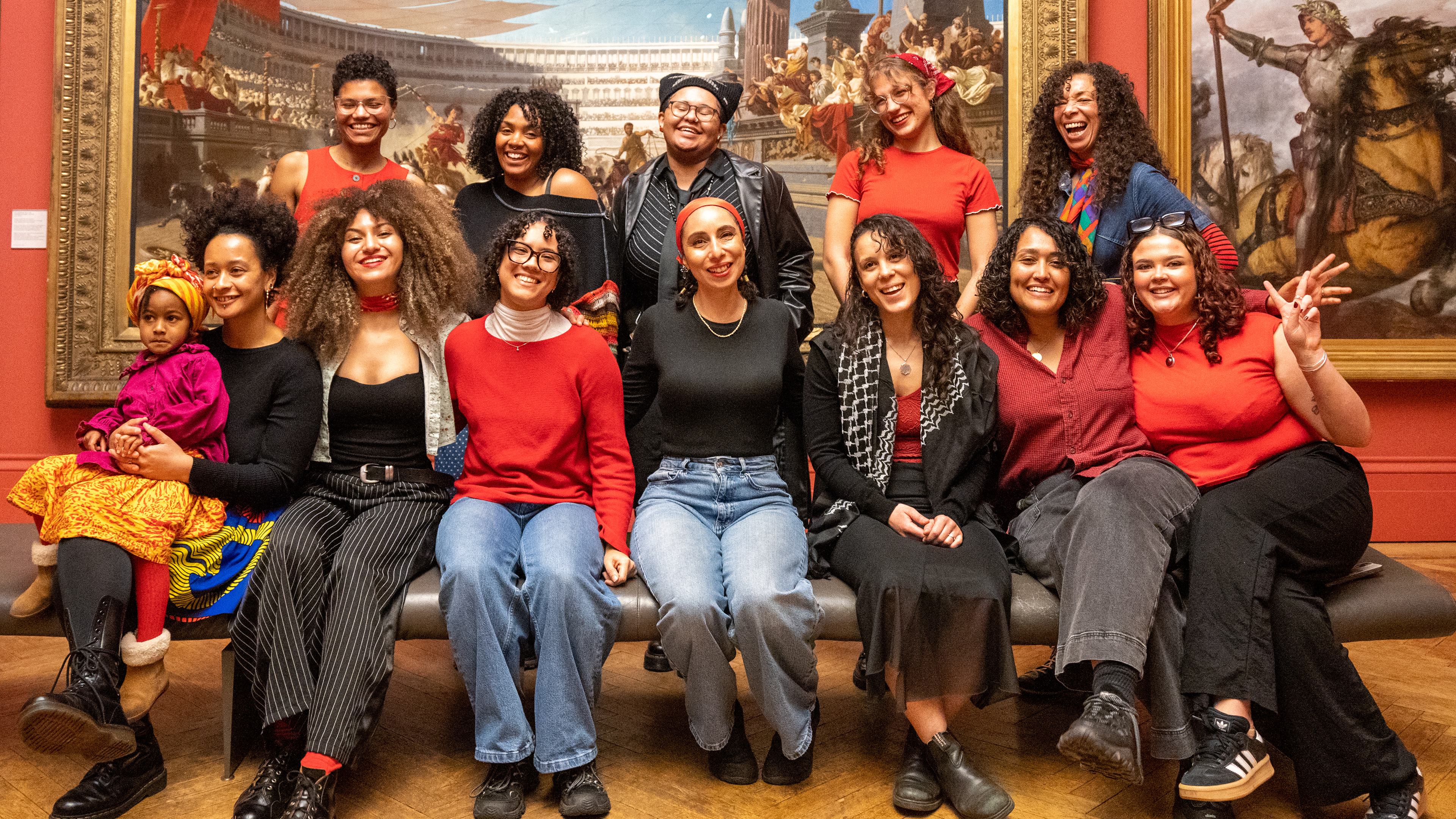
(Credit: Lydia Hooke)
Introduction to the 'Enter, TRAGIC MULATTA' Project
'Enter, TRAGIC MULATTA’ was a creative storytelling project exploring how women with mixed heritage are depicted in theatre, film, and literature. The central focus of the project was the 'tragic mulatto myth', a literary stereotype that portrays mixed race people as tragic figures who cannot fit into racialised society and suffer greatly as a result. The vast majority of tragic mulatto characters are women, and the traits that bond them to the trope can be associated with other gender-based racial stereotypes. This project invited mixed heritage women and non-binary people from Greater Manchester to challenge the tragic mulatto myth through poetry writing and performance.
Over the course of six workshops at LOWRY, the group created a collection of new and original writing about their experiences of having mixed heritage. In November 2026, we took to the stage at Manchester Art Gallery to perform our writing and spotlight tragic mulatta characters from literature and film. By sharing new stories of resistance and joy, we aimed to challenge common assumptions about people with mixed heritage and expand the existing archive relating to mixed race identity.
Enter, TRAGIC MULATTA was supported using public funding by the National Lottery through Arts Council England and LOWRY as part of their Artist Development Programme.
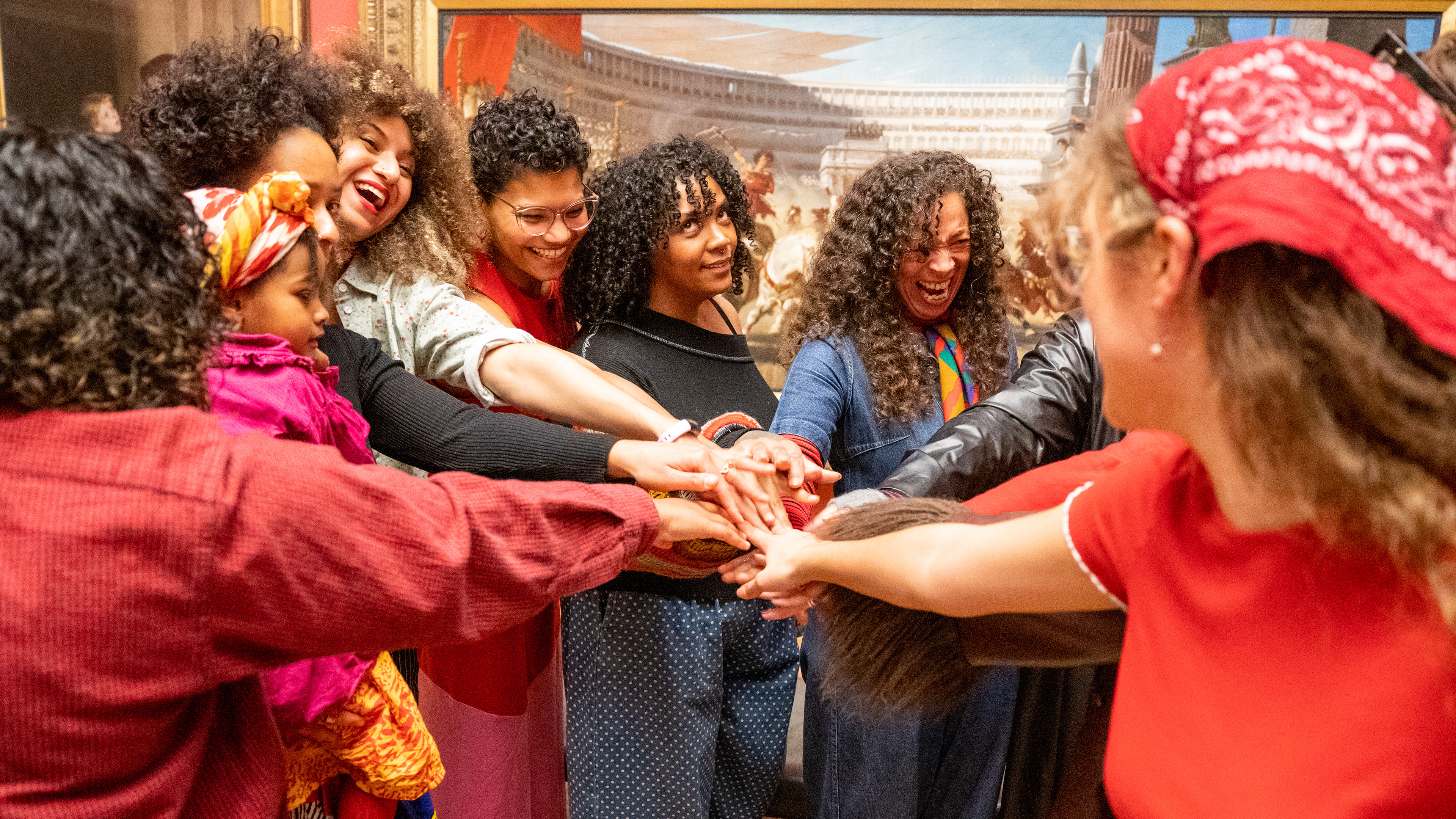
(Credit: Lydia Hooke)
'Enter, TRAGIC MULATTA' Workshops at LOWRY
The 'Enter, TRAGIC MULATTA' workshops took place at LOWRY, a theatre and arts complex in Manchester. Led by poet and performer, Ella Otomewo, the workshops included a mixture of individual writing tasks and performing exercises. We wrote about hair, families, relationships, imposter syndrome, memories of belonging, and moments of feeling at sea. We explored the myths that have been pasted onto our brown bodies by the people around us. We learnt more about the history of mixed race representation in the media by examining tragic mulatta characters throughout time.
Most of us had never been in a room with so many mixed people of white and Black ancestry before, and the excitement was palpable. Everyone’s writing style was different, and a few of the participants had never written poetry or performed their writing before. Although the group included a mixture of ages, and participants had grown up in different parts of the UK, our stories were tied together by having faced similar questions about who we are and how we walk through the world.
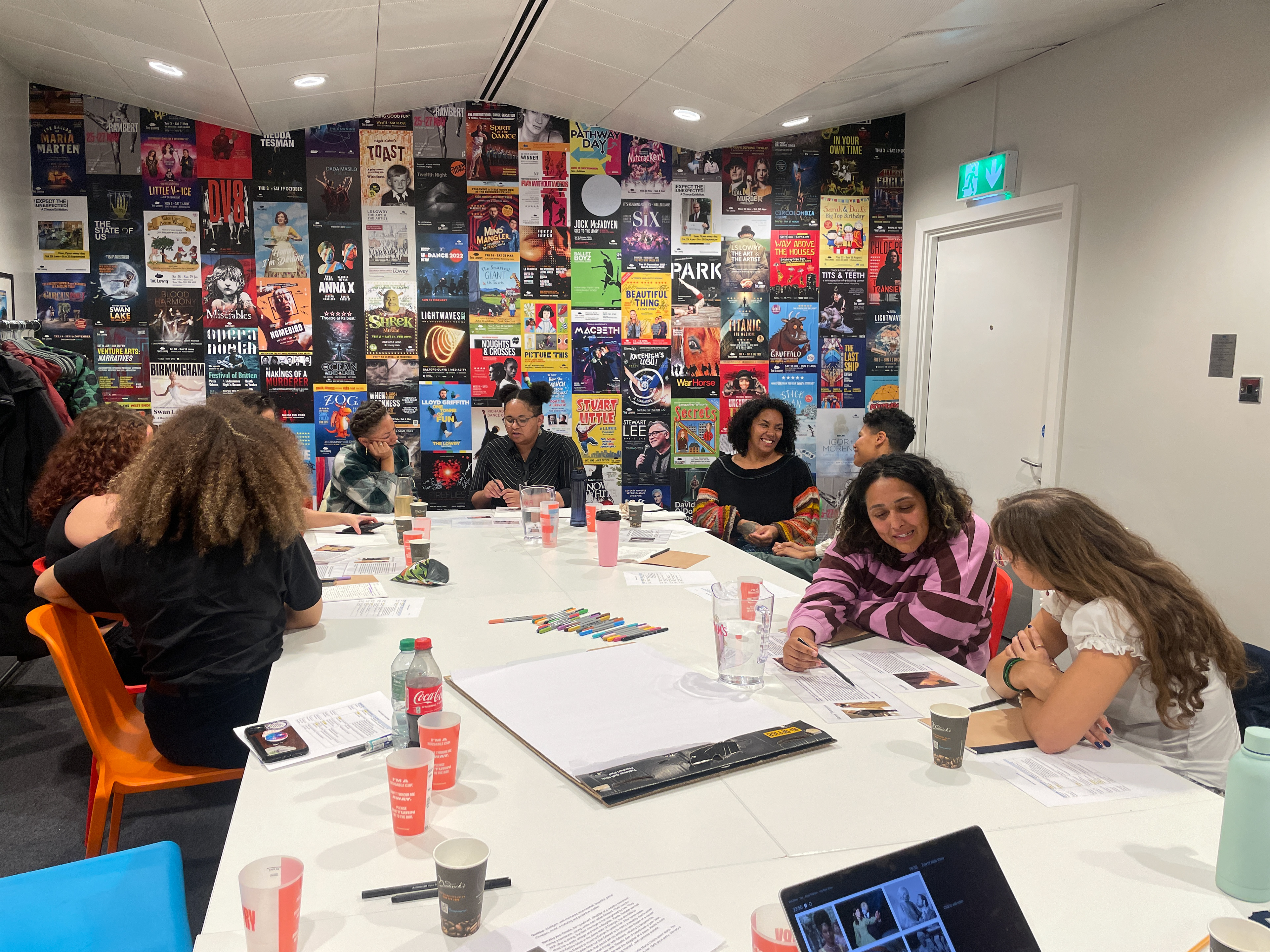
First workshop of 'Enter, Tragic Mulatta'. Credit: Amy Townsend-Lowcock
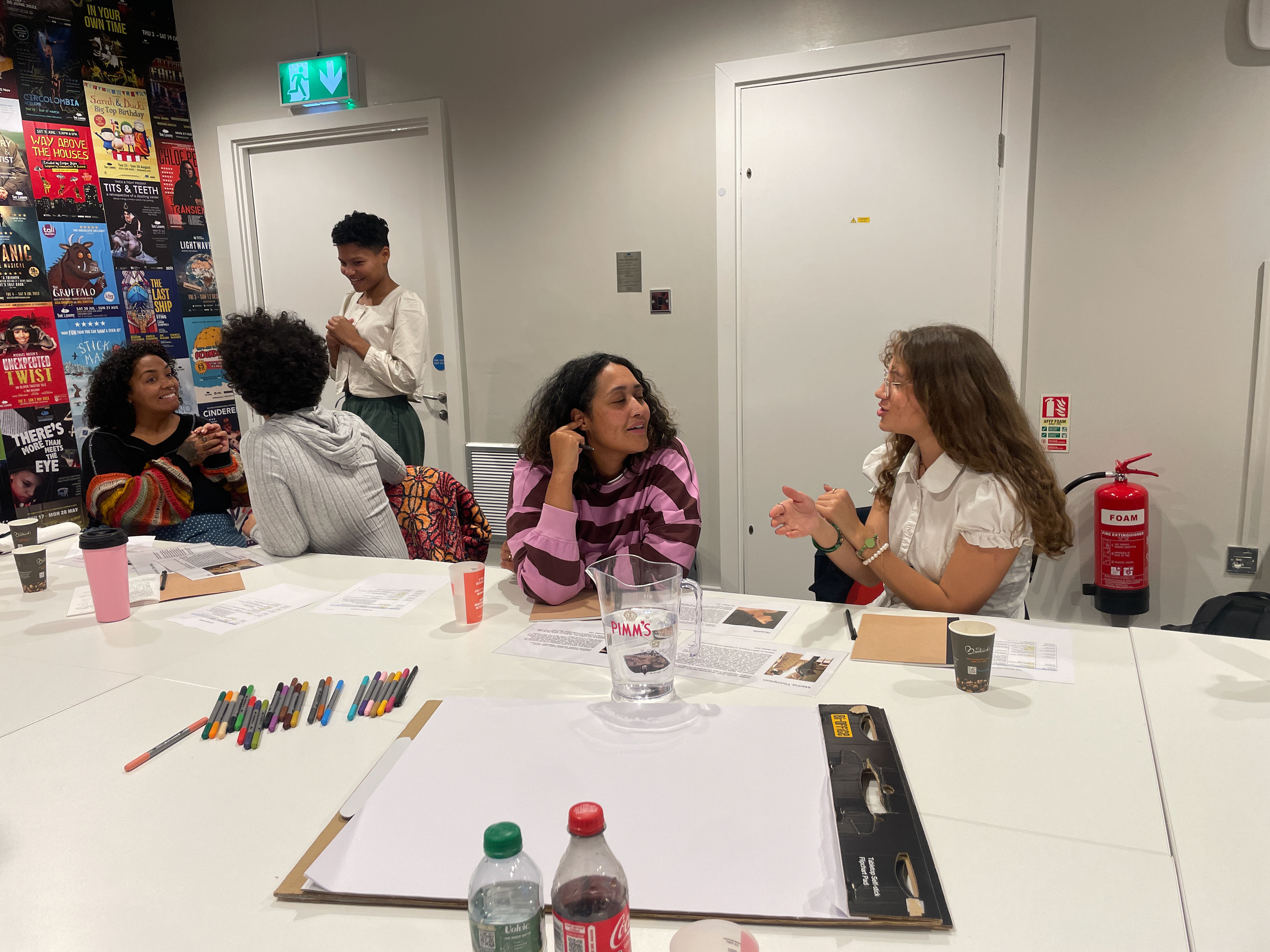
First workshop of 'Enter, Tragic Mulatta'. Credit: Amy Townsend-Lowcock
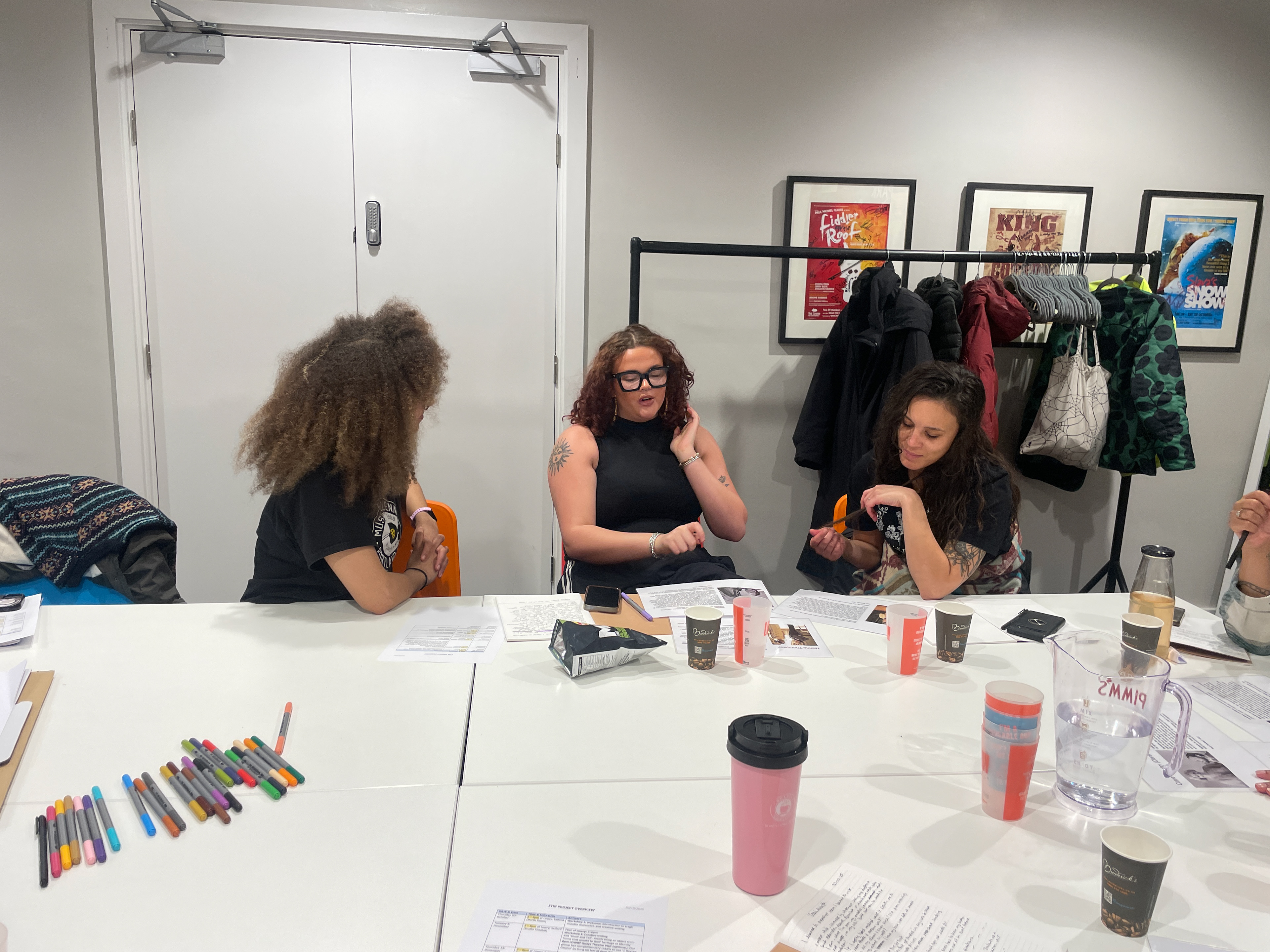
First workshop of 'Enter, Tragic Mulatta'. Credit: Amy Townsend-Lowcock
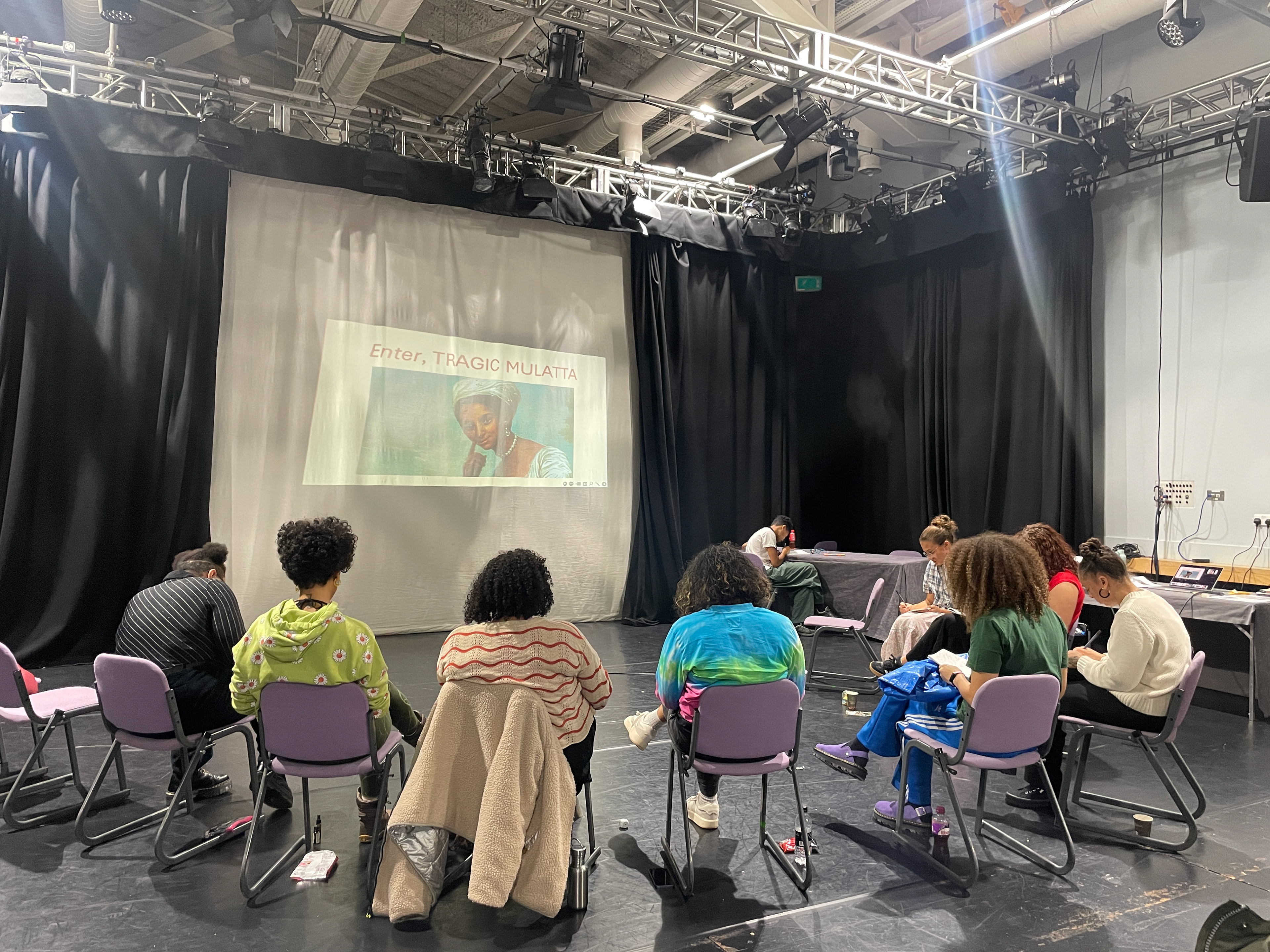
Second workshop of 'Enter, Tragic Mulatta'. Credit: Amy Townsend-Lowcock
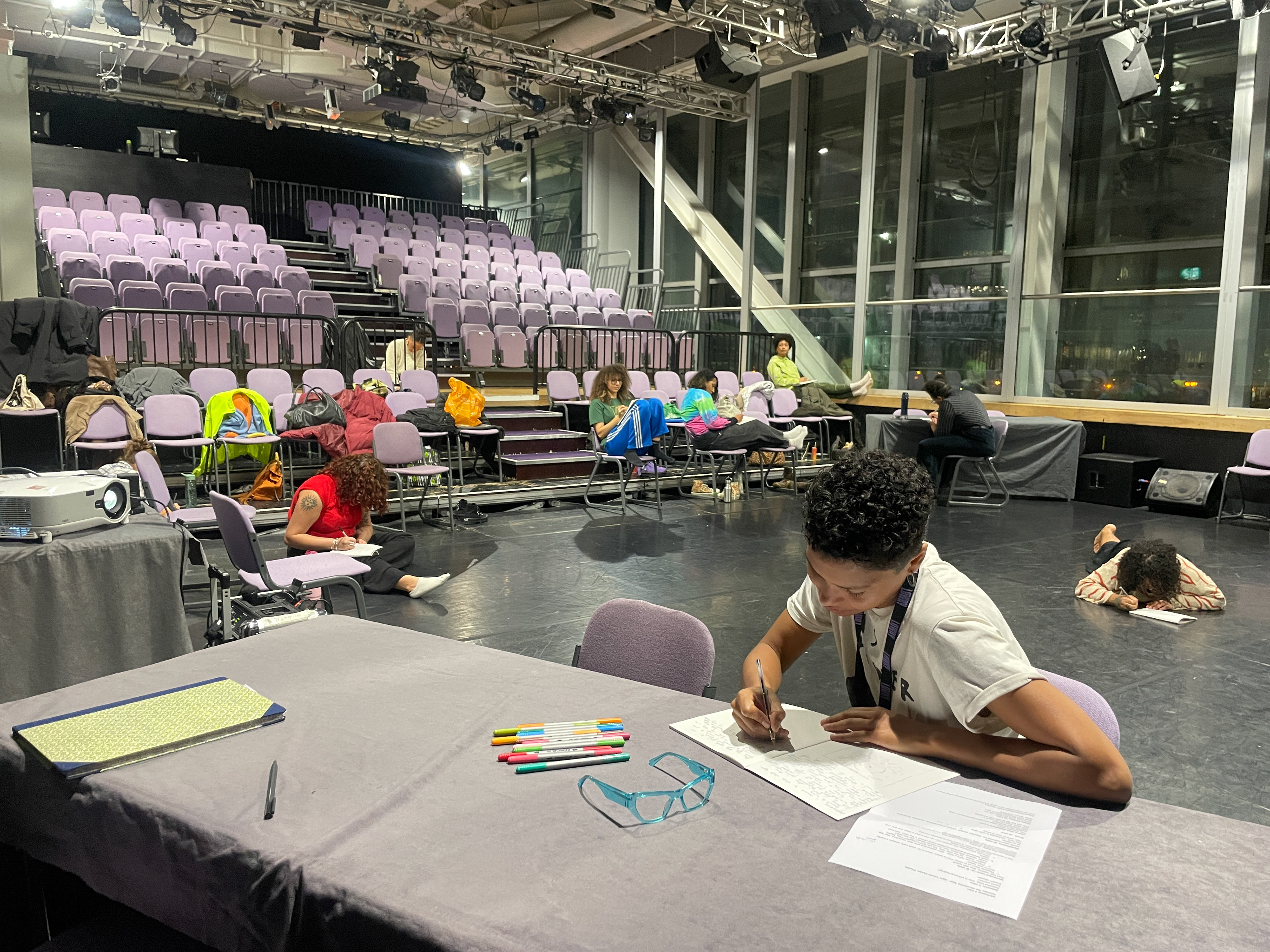
Second workshop of 'Enter, Tragic Mulatta'. Credit: Amy Townsend-Lowcock
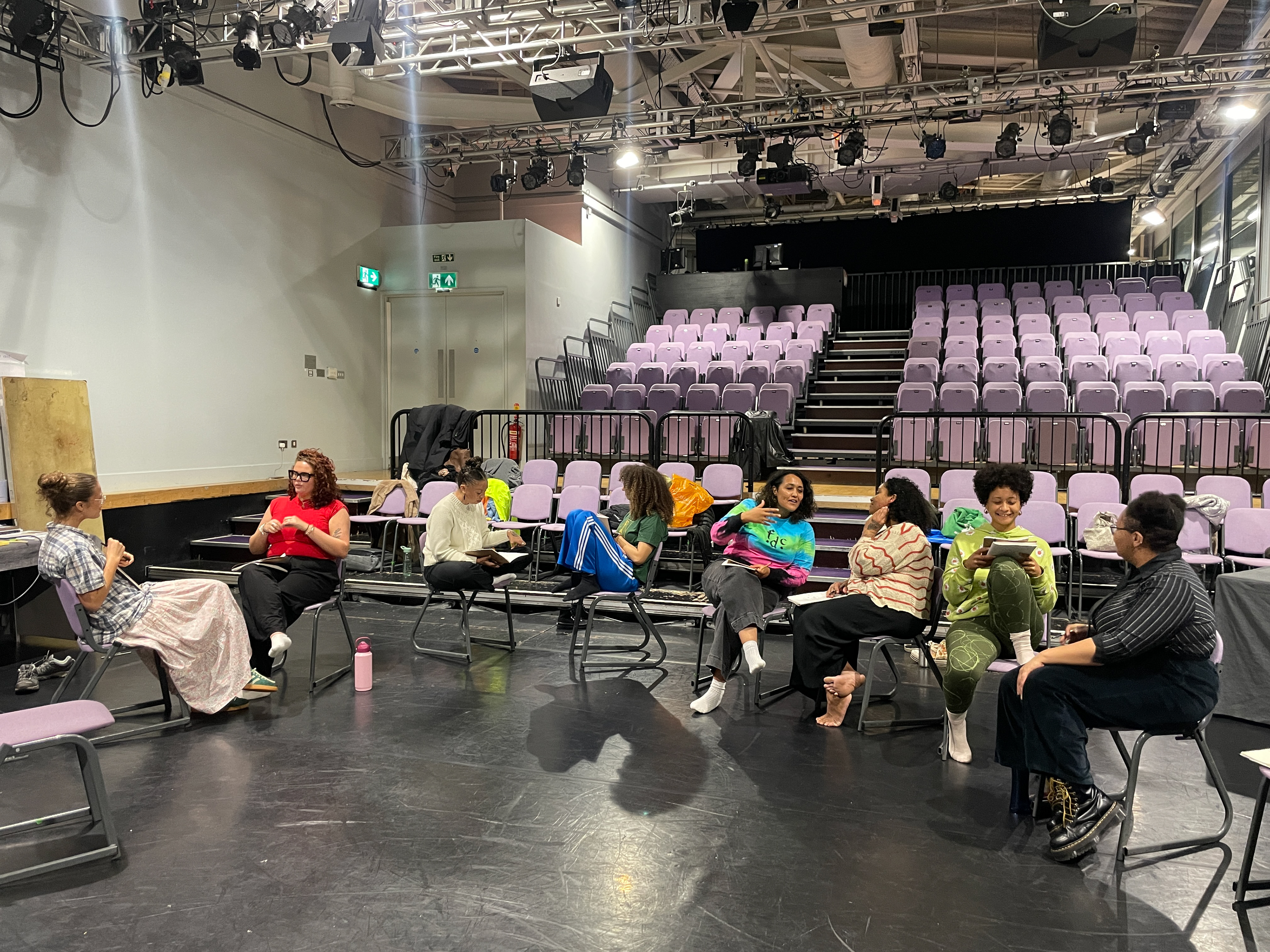
Second workshop of 'Enter, Tragic Mulatta'. Credit: Amy Townsend-Lowcock
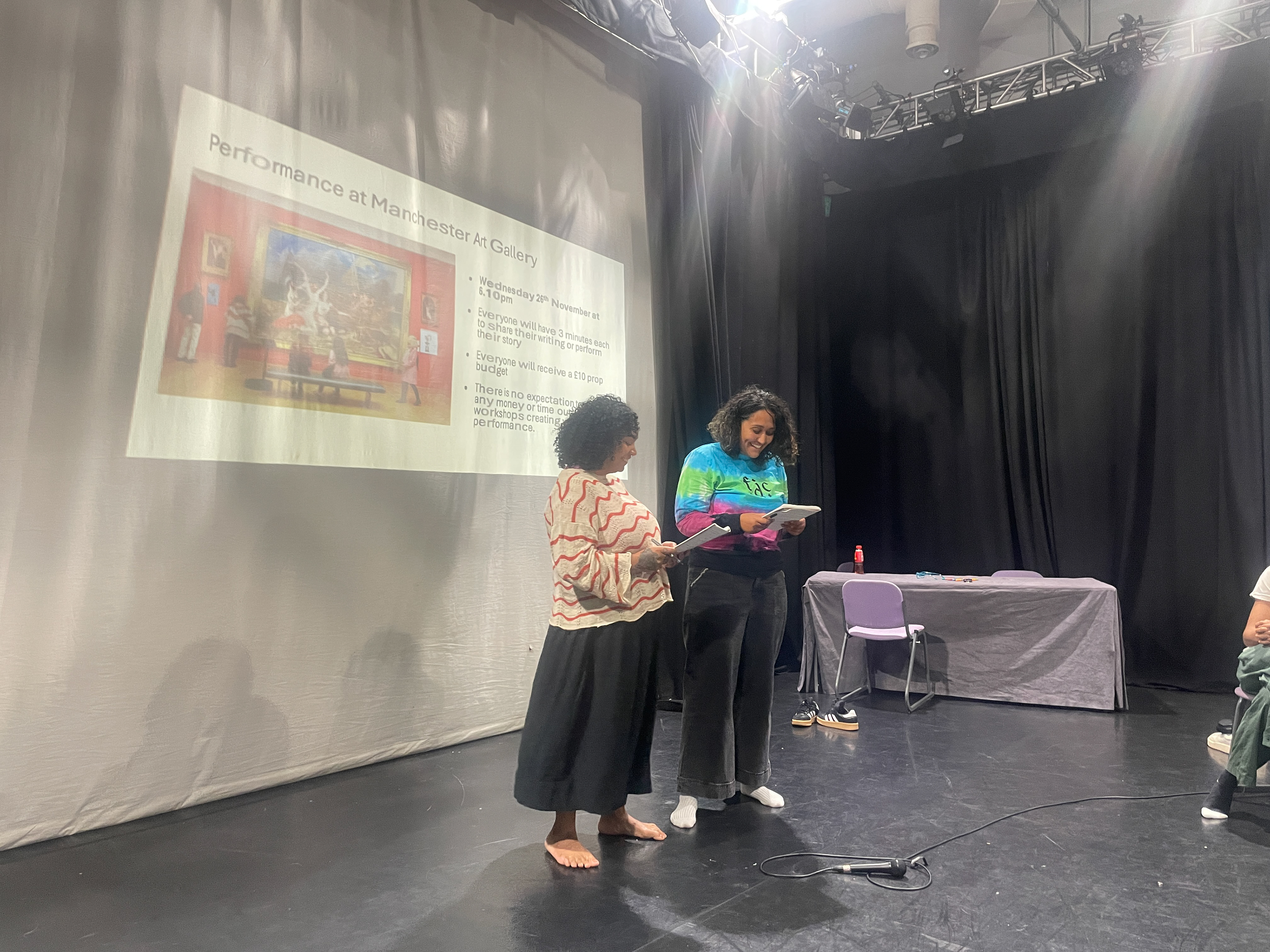
Second workshop of 'Enter, Tragic Mulatta'. Credit: Amy Townsend-Lowcock
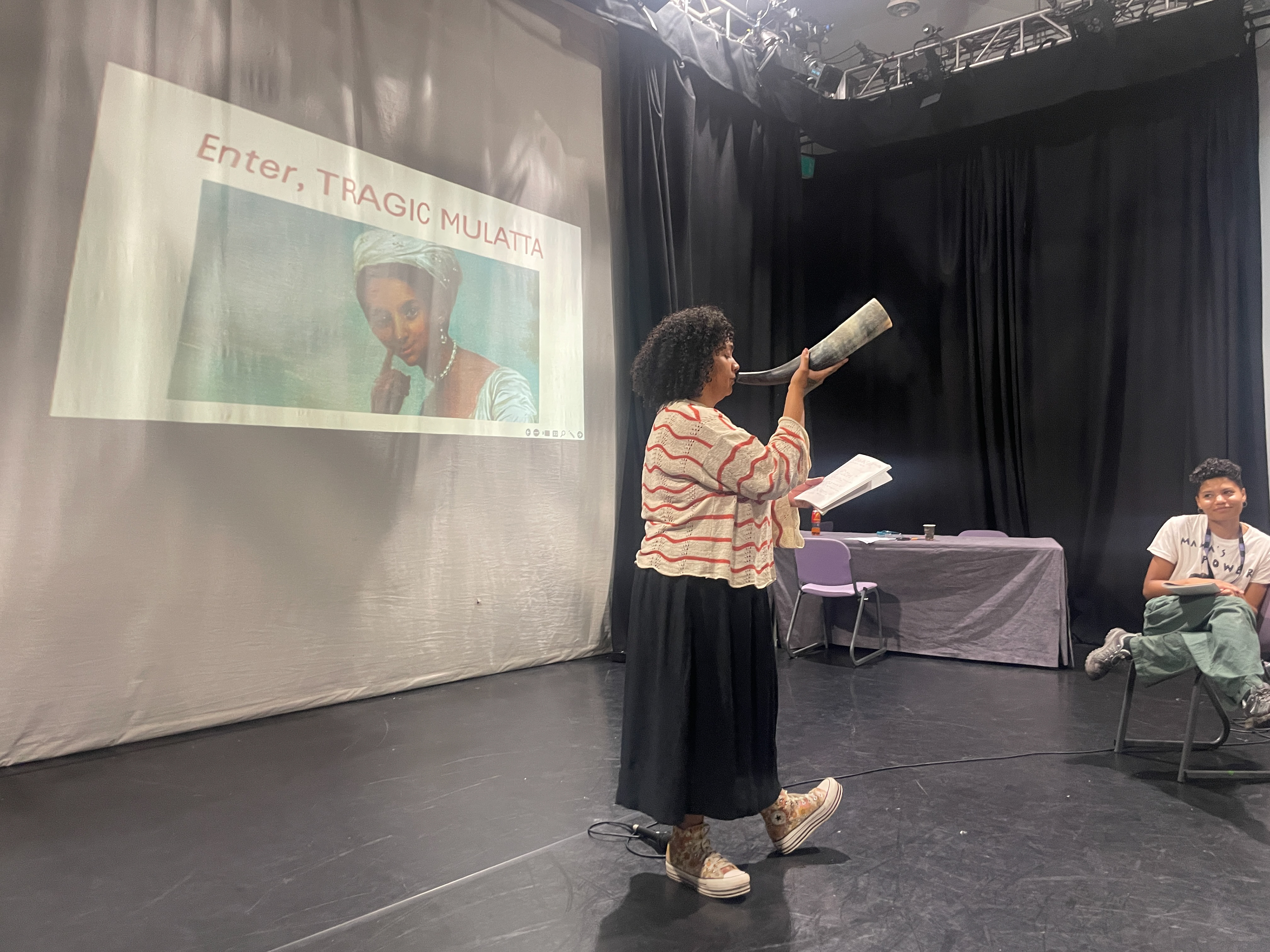
Second workshop of 'Enter, Tragic Mulatta'. Credit: Amy Townsend-Lowcock
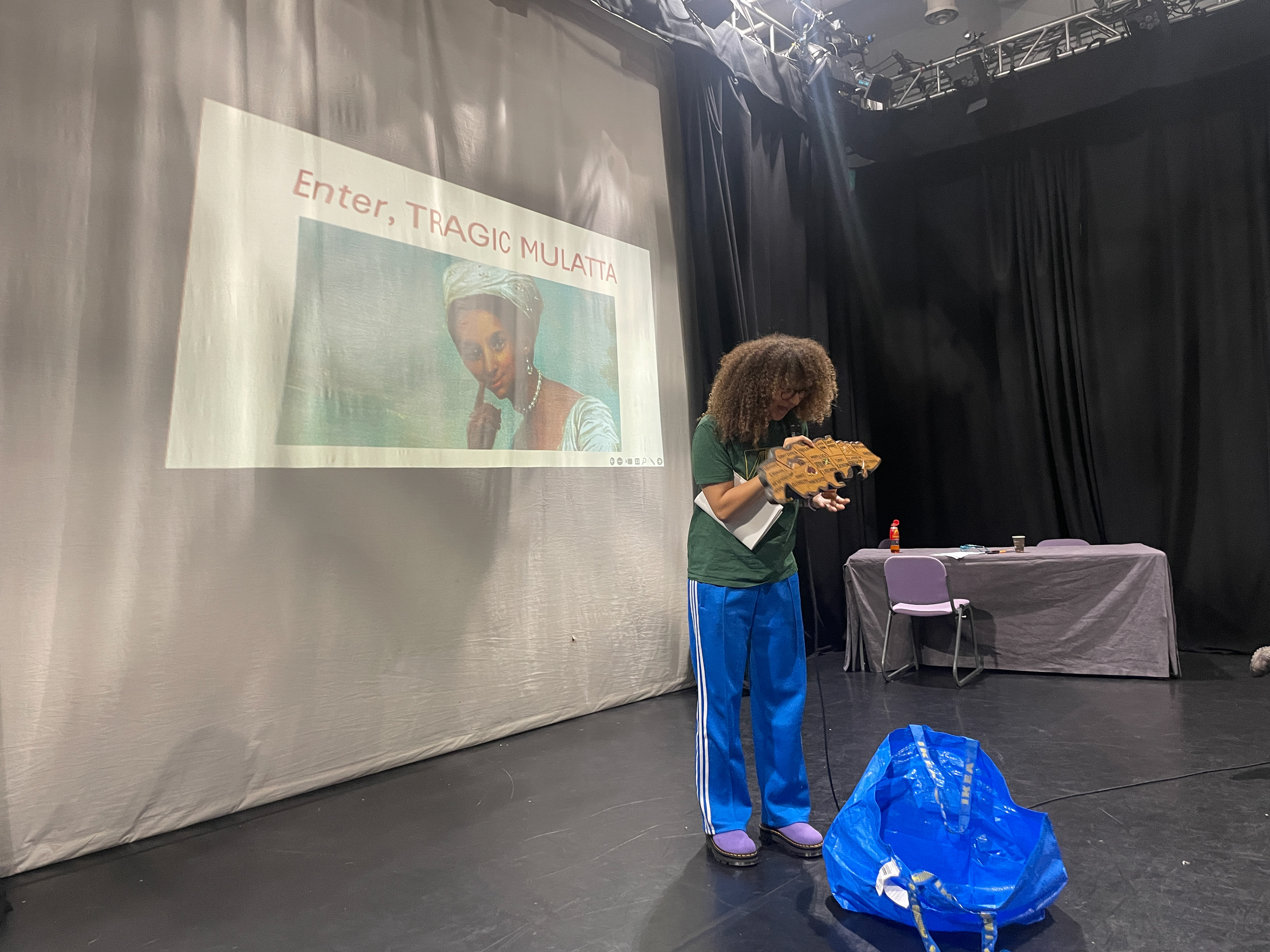
Second workshop of 'Enter, Tragic Mulatta'. Credit: Amy Townsend-Lowcock
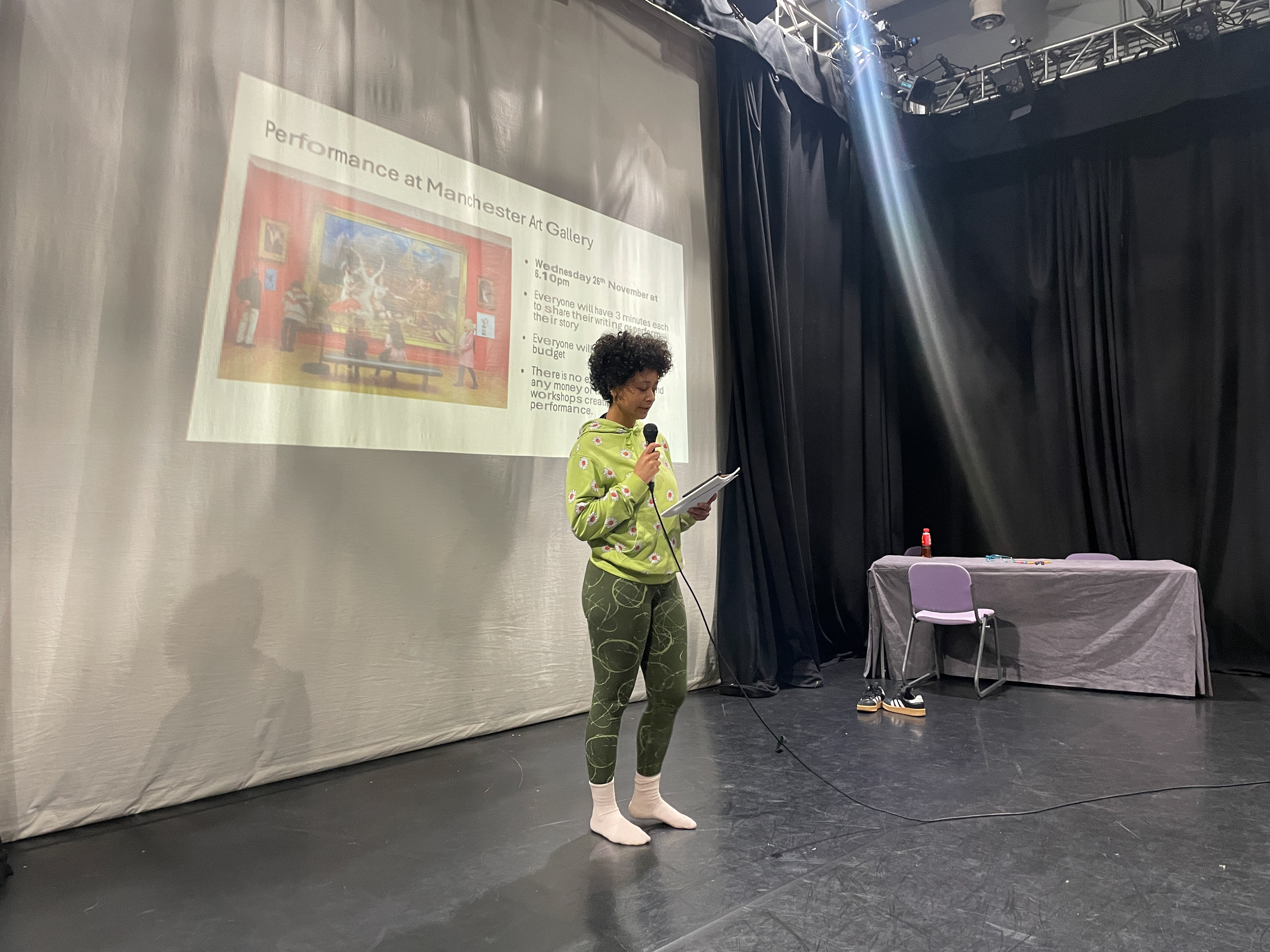
Second workshop of 'Enter, Tragic Mulatta'. Credit: Amy Townsend-Lowcock
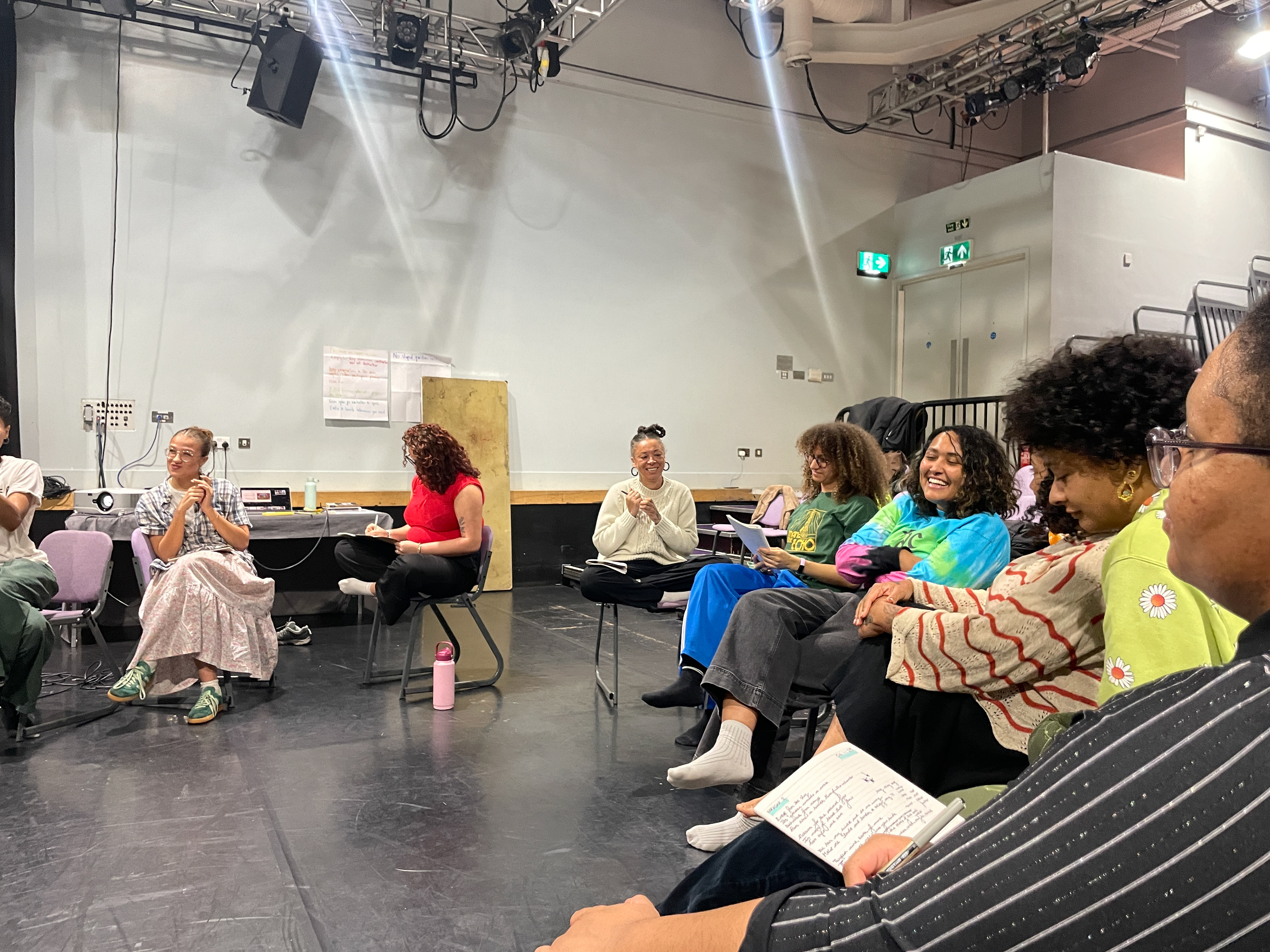
Second workshop of 'Enter, Tragic Mulatta'. Credit: Amy Townsend-Lowcock
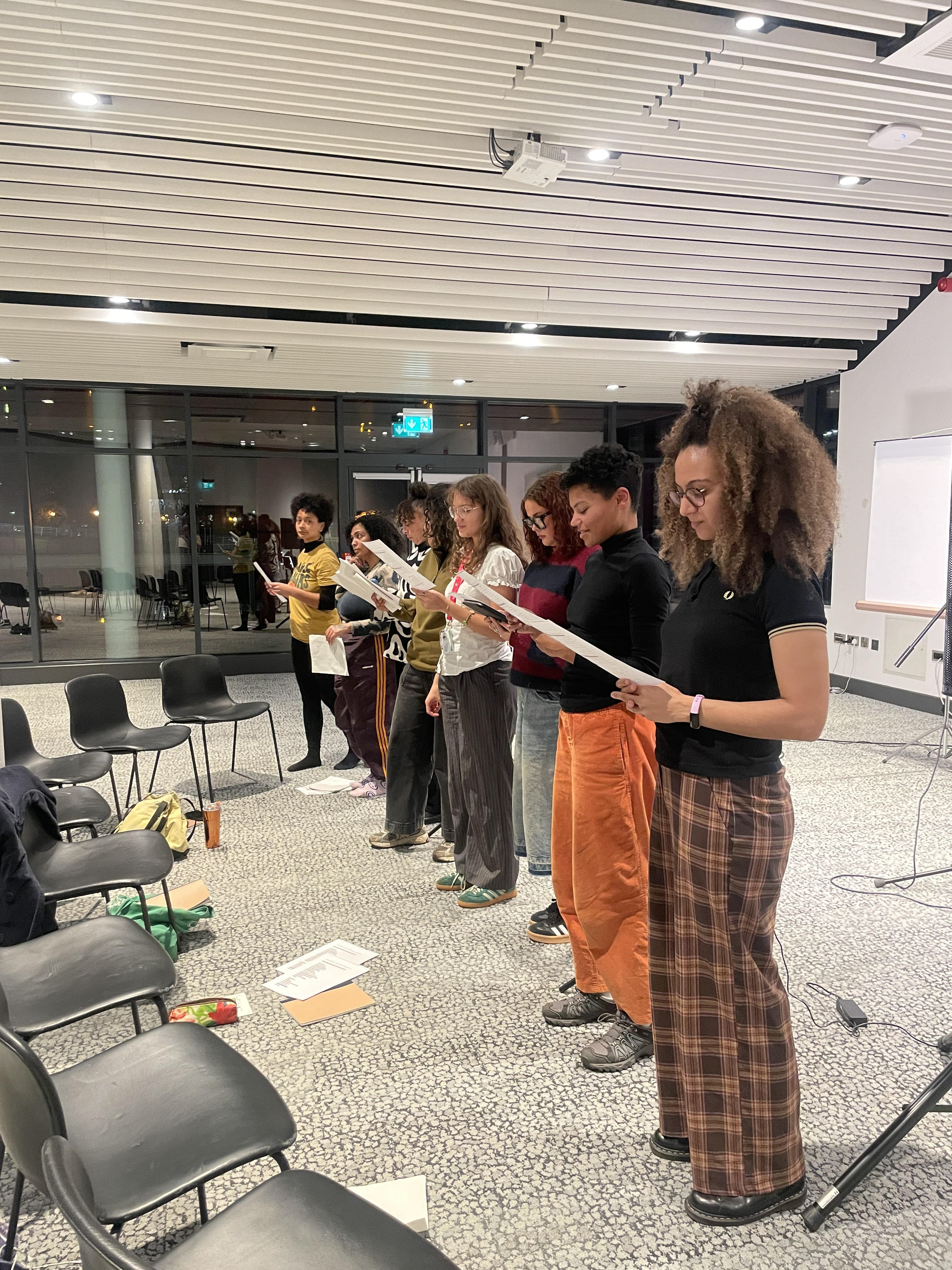
Dress rehearsal for the 'Enter, Tragic Mulatta' performance at Manchester Art Gallery. Credit: Amy Townsend-Lowcock
Performance at Manchester Art Gallery
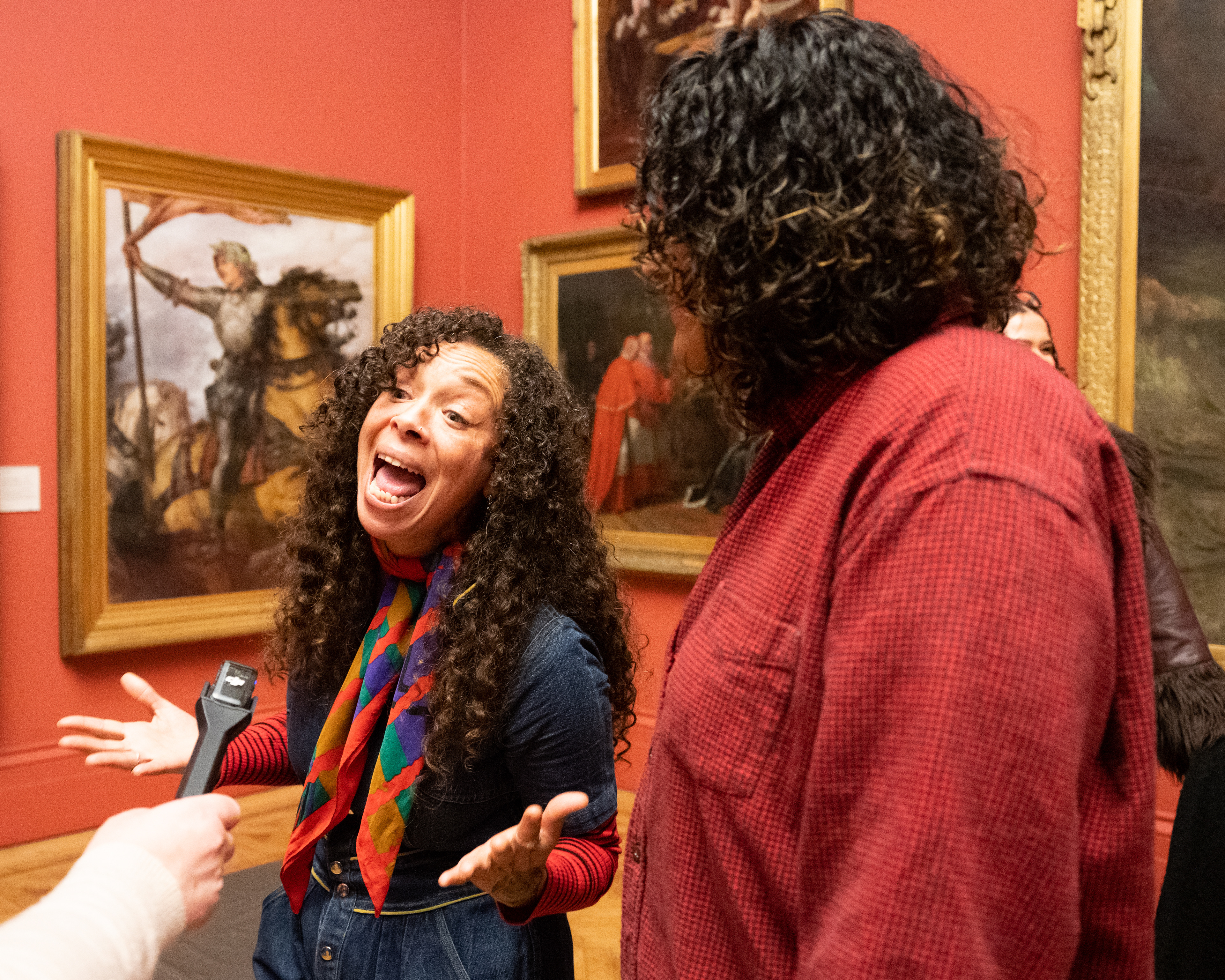
On 26 November 2025, the group performed their writing in the historic Victorian Galleries at Manchester Art Gallery. The Victorian Galleries were chosen as the backdrop for the performance, as the art on display was created around the time that the first tragic mulatta characters were born. Rosalie and Xarifa appeared in Lydia Maria Child's short story, The Quadroons, in 1842 and introduced the world to the literary trope.
Performers shared their writing alongside a photo of an object that they felt represented their heritage. These object allowed us to speak back to the art and archive on display in the room, and introduce new artefacts into the canon of mixed race representation in the media. It was an evening of vulnerability, pride, and empowerment. We closed the show with a group poem, celebrating the journey we had been on together.
The 'Enter, TRAGIC MULATTA' Archive
The 'Enter, TRAGIC MULATTA' project aimed to change challenge common misconceptions about people with mixed heritage and highlight how popular myths about mixed heritage identity can traced back to long-standing racial stereotypes.
Alongside sharing our stories with a public audience, we have created our own archive relating to mixed heritage experiences to challenge the misleading narratives that the tragic mulatto stereotype fuels. These objects were selected by participants as they speak to their experiences of being mixed heritage. You can read more about the stories behind each object and who they belong to by clicking on the images.
![Fae’s object: “The silver bracelet was my dad’s. He took it off a few years ago and gave it to me. All of my memories of him are with this bracelet that he got in India, and he had it hammered onto his arm. That is like a part of him that I can have, and I can keep. My mum lost her mum at a young age and gave me those [wooden] bracelets. I have a picture of my grandmother wearing them that I’ve got on my wall. I wear those brown bracelets when I want to feel connected, or when I’m doing something special I’ll put them on. [The silver and wooden bracelets] together are my connection to my heritage, in a way.” Credit: Fae Wolfe](https://cdn.myportfolio.com/75c4ce66-ac1b-47dd-ab71-2006d7e3d475/da9663f8-d04a-4cf4-b51c-680f5e71227b_rw_3840.jpg?h=3960564d5ddb8635bc9c80a80de04d28)
Fae’s object: “The silver bracelet was my dad’s. He took it off a few years ago and gave it to me. All of my memories of him are with this bracelet that he got in India, and he had it hammered onto his arm. That is like a part of him that I can have, and I can keep. My mum lost her mum at a young age and gave me those [wooden] bracelets. I have a picture of my grandmother wearing them that I’ve got on my wall. I wear those brown bracelets when I want to feel connected, or when I’m doing something special I’ll put them on. [The silver and wooden bracelets] together are my connection to my heritage, in a way.” Credit: Fae Wolfe
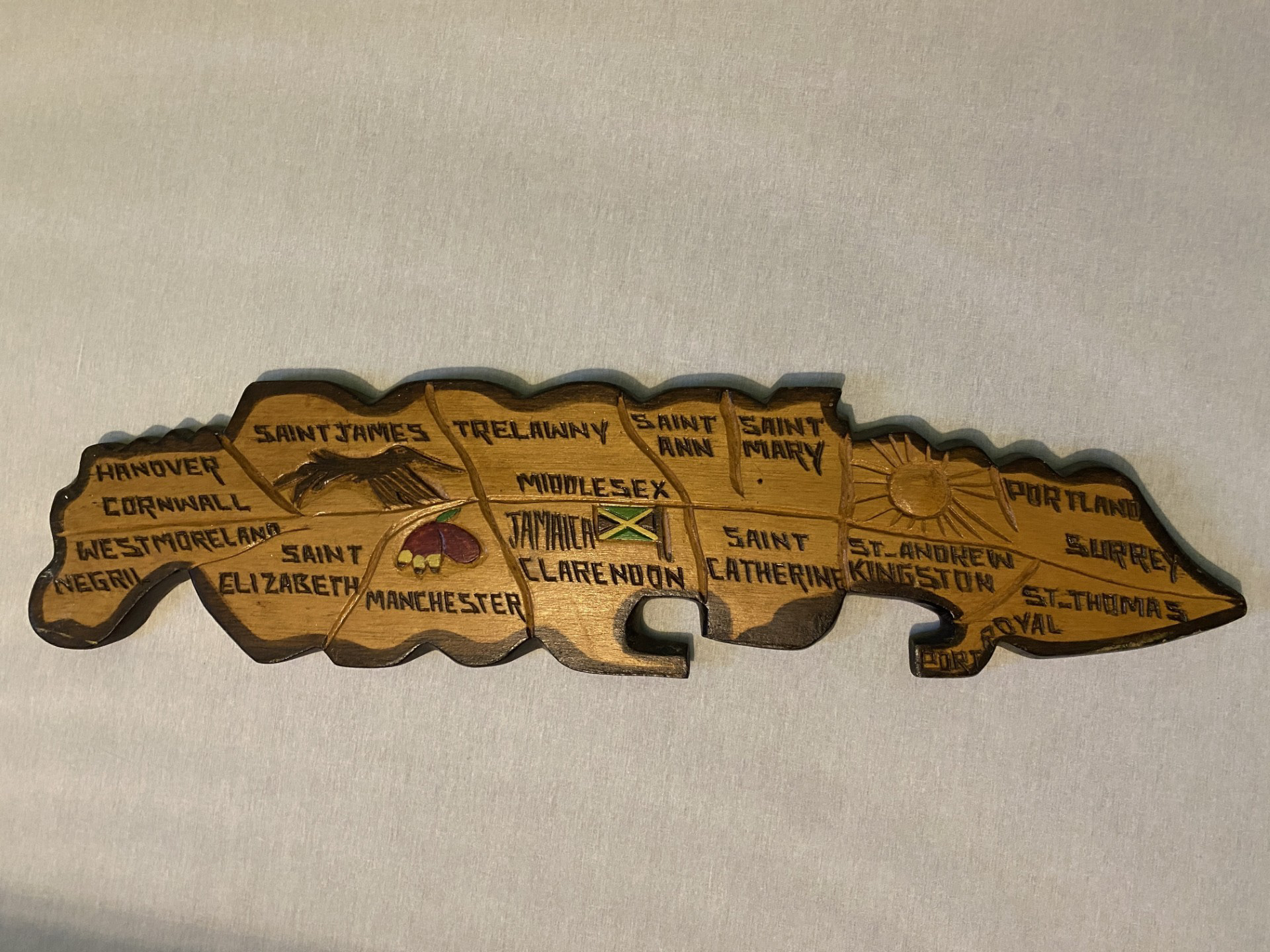
Lauren’s Object: “My object is a map of Jamaica that was given from my grandad to my mum in the 80s, I think. Every Caribbean house has one. Plywood, I think it’s made from. It’s got all the different areas of Jamaica on it. It’s always been at the top of my door. So, that’s where I’ve walked in and out all throughout my life, and it’s always been in every house we’ve had. So, yeah, I feel like it’s a good representation of me.” Credit: Lauren Fitzpatrick
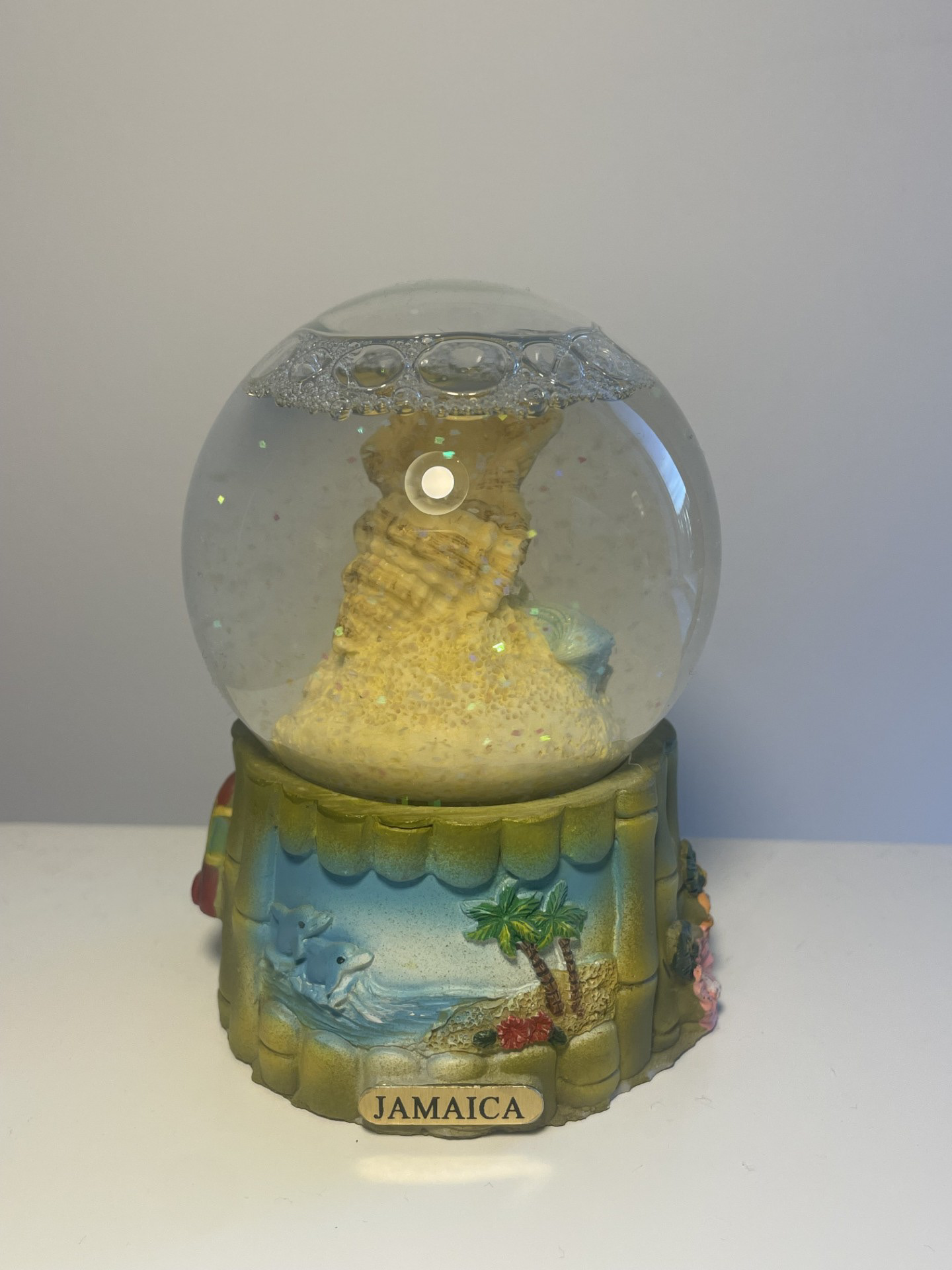
Katie’s object: “My cousins bought it for me when they came round one summer. I have it on my desk always. I think it’s ironic that it’s a snow globe but it’s got a sandscape in it. It’s really touristy and maybe a bit garish, but I think it’s really sweet and pretty. I think it encapsulates how I feel so proud of who I am and of showing that to other people. But that I feel there’s a real disconnect between myself and Jamaica, where my grandma is from.” Credit: Katie Sutton
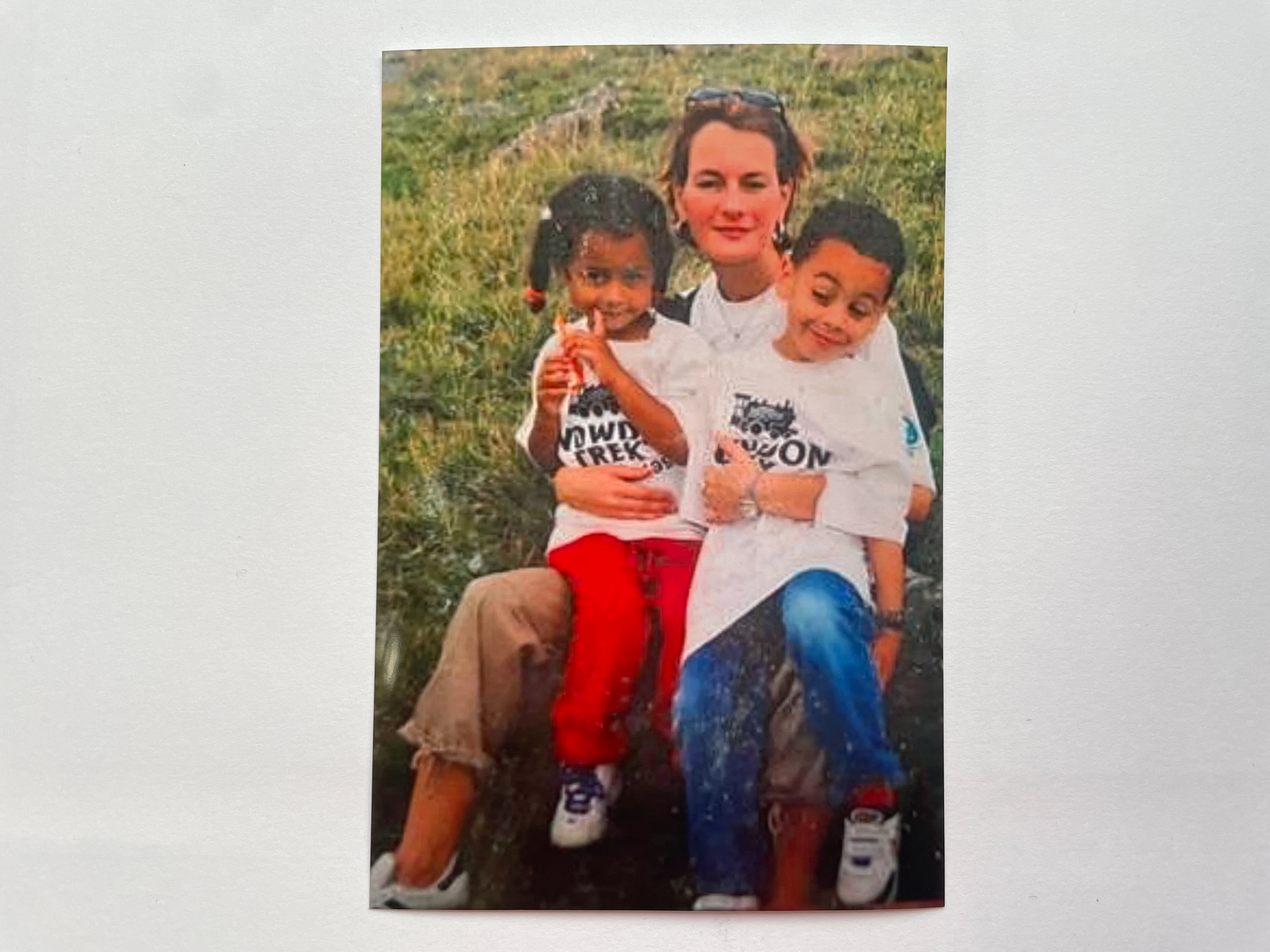
Kayya’s object: “That is really the only picture of me, my mum, and my brother. I think on that day we were climbing Mount Snowdon. I guess that I chose that picture because it takes me back to a time when I felt happy.” Credit: Kayya Hudson
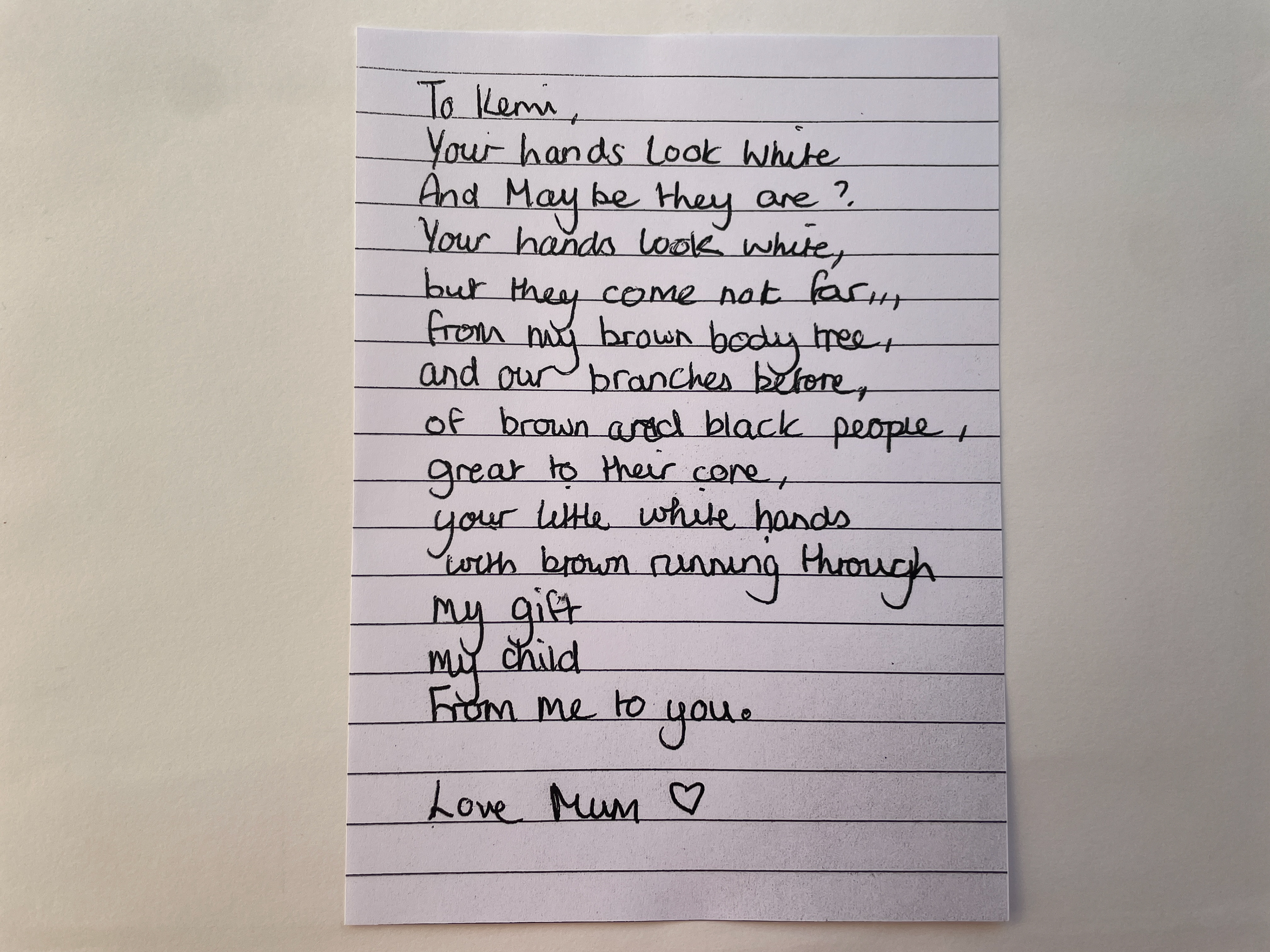
Kemi’s object: “My object was a poem that my mum had written to me, not that long ago actually. I recently had spoken to her more about how I felt about my identity. My mum’s always been very aware that I obviously don’t look like how she looks. I think when I was born she was a bit confused. She’d written that poem about me as a baby when I was born and how her brown body gave birth to me. Yeah it was a very special poem. When I read it, I was like, “Oh, mum. That’s so cute!” Credit: Kemi Charters-Bastide
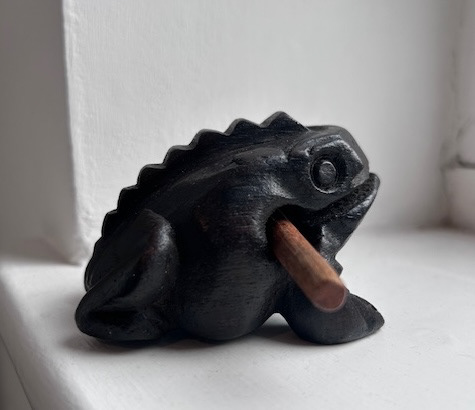
Kirsty’s object: “The wooden frog is called Omar, and the reason I picked Omar was because it’s a really cute little frog. It comes with a wooden stick and you can move it on Omar’s back and it makes a little frog sound. I went to Sicily in September. There were no people of colour. I came across this guy, called Omar. He was a Black guy and he was wearing African patterns. I made friends with him. I still text him now. I feel like it’s a universal thing. If you’re a person of colour and you’re in a place where there’s nobody else of colour, you just have this unspoken connection. Like, this unity. I can’t describe it but it’s like, ‘we’re in this together’. It’s lovely.” Credit: Kirsty Devlin
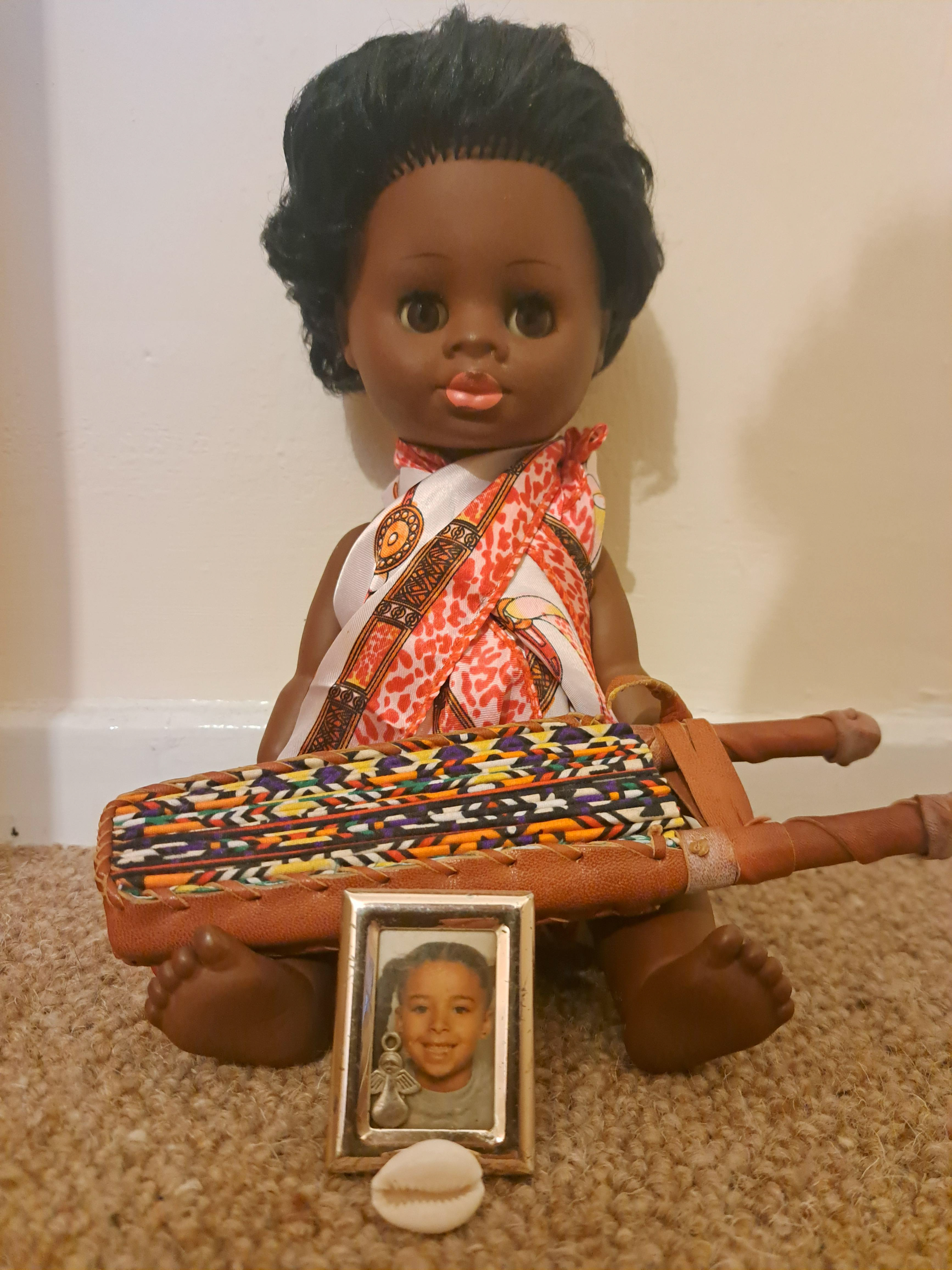
Lydia’s Object: “That was a doll that was my sister’s, and then it was mine. When I look at her, she seems like such a being, such an entity. I’ve got some shelves at home, and I’ve got her on there. It’s almost like a little shrine to her, because we lived in a really dysregulated household. It was really chaotic. I mean, it was a loving household and we were a close knit family. But I just think of what that doll’s seen, sat there innocently. And it’s almost like she carries all that. One of my first ideas for a poem was talking about things through her eyes. I used a tiny picture of myself as well and a little cowrie bead to represent the ancestry. She’s a baby doll but to me she seems like a woman.” Credit: Lydia Williams
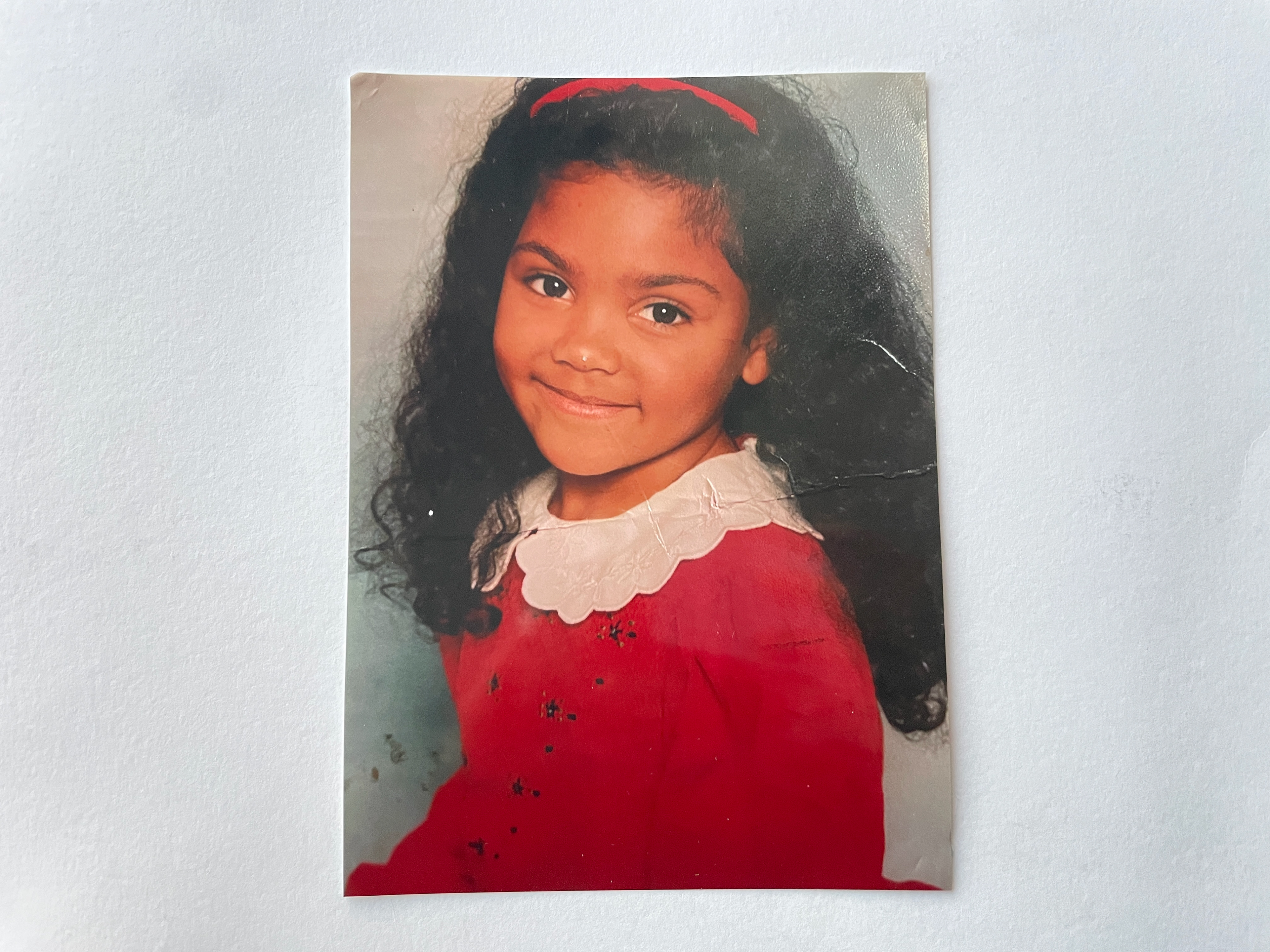
Ruby Ann's Object: Photo of Ruby-Ann at school. Credit: Ruby-Ann Patterson
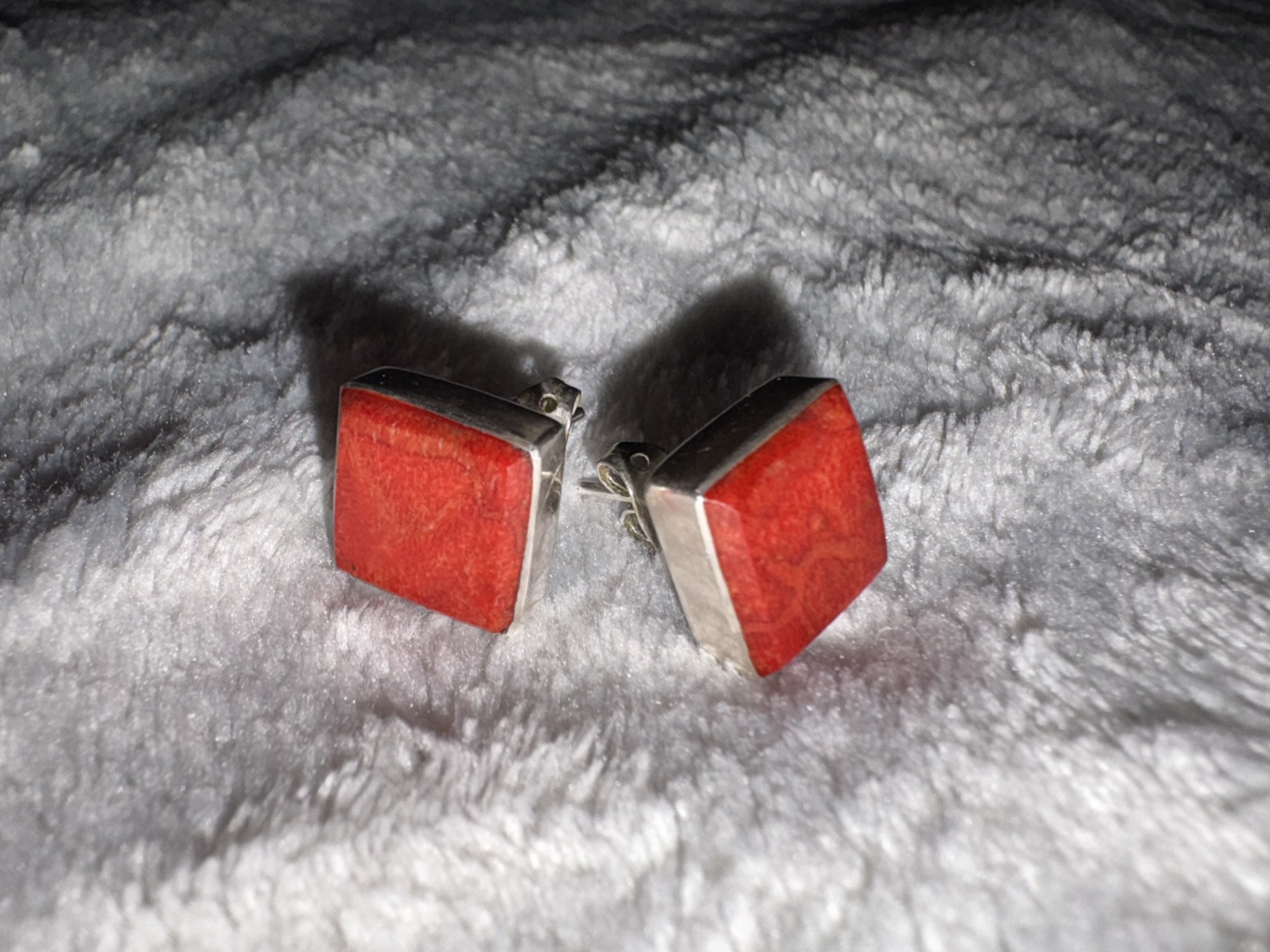
Indigo’s object: Red earrings. Credit: Indigo Jay
Oral History Interviews with 'Enter, TRAGIC MULATTA' Participants
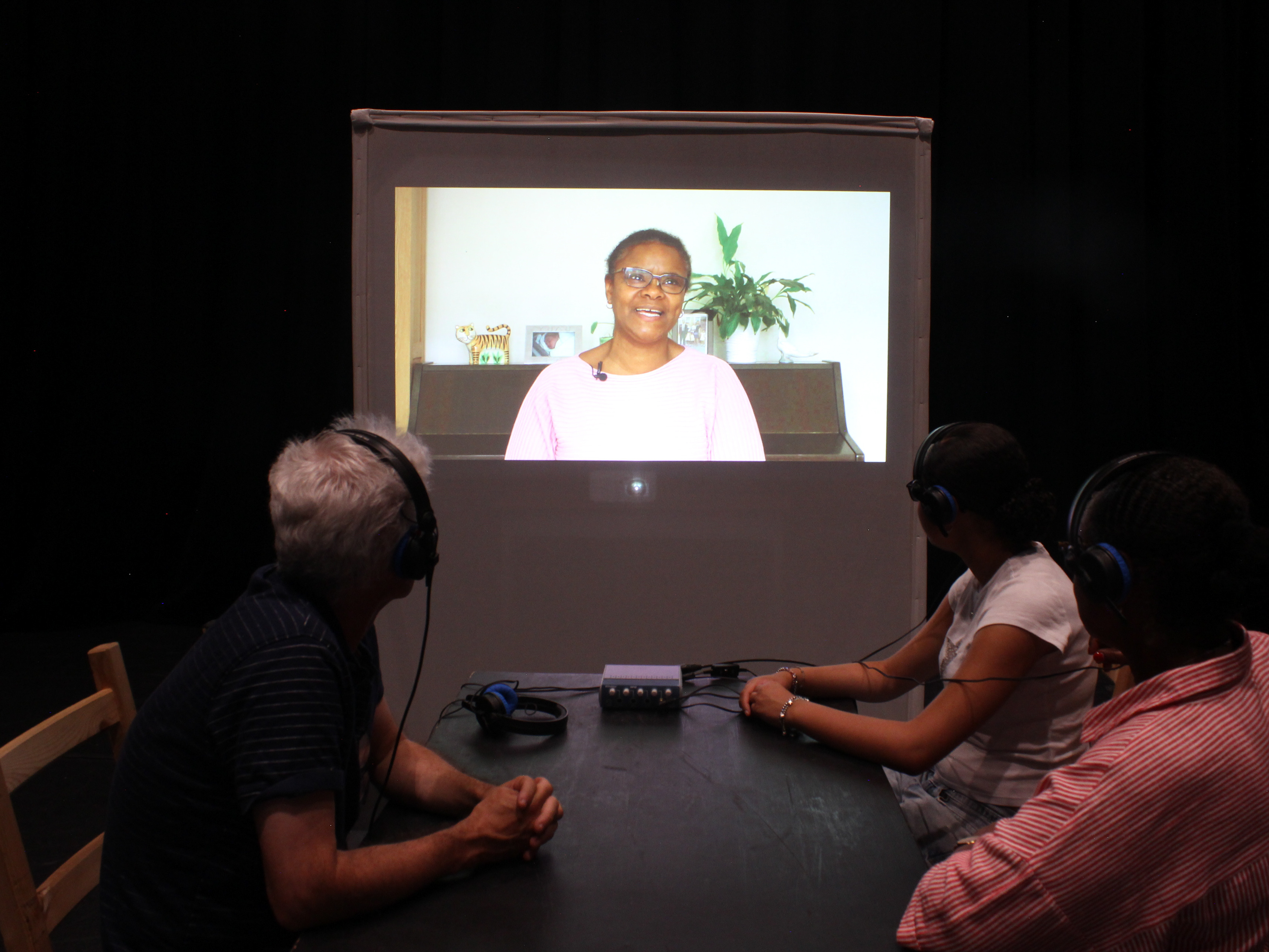
These interviews have been donated to the Ahmed Iqbal Ullah RACE Centre in Manchester to expand the existing archive of mixed heritage experiences. Learn more about the experiences that influenced participants' poems and why they signed up to take part in the project in each video.
Brief History of the 'Tragic Mulatto Myth'
The tragic mulatta is a mixed heritage stock character that first appeared in Lydia Maria Child's short story, The Quadroons, in 1842. She is most commonly depicted as having white and Black ancestry. The attributes associated with tragic mulatta stock characters changed over time, evolving with shifting social anxieties about race and racial mixing. Regardless of the era she was created in, the tragic mulatta's ethnicity is fundamental to her story and is often portrayed as the 'tragic flaw' that secures her ruin.
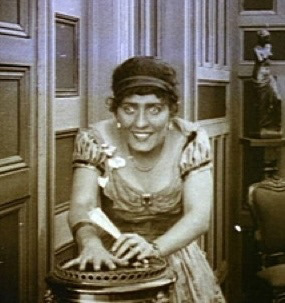
Lydia Brown in 'The Birth of a Nation' (DW Griffith, 1915). Portrayed by Mary Alden.
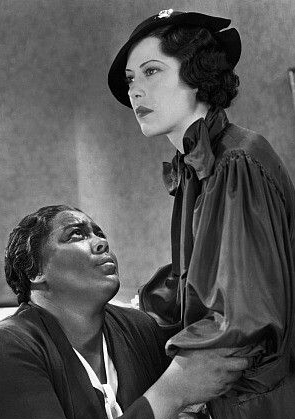
Peola Johnson in 'Imitation of Life' (John M. Stahl, 1934). Portrayed by Fredi Washington.
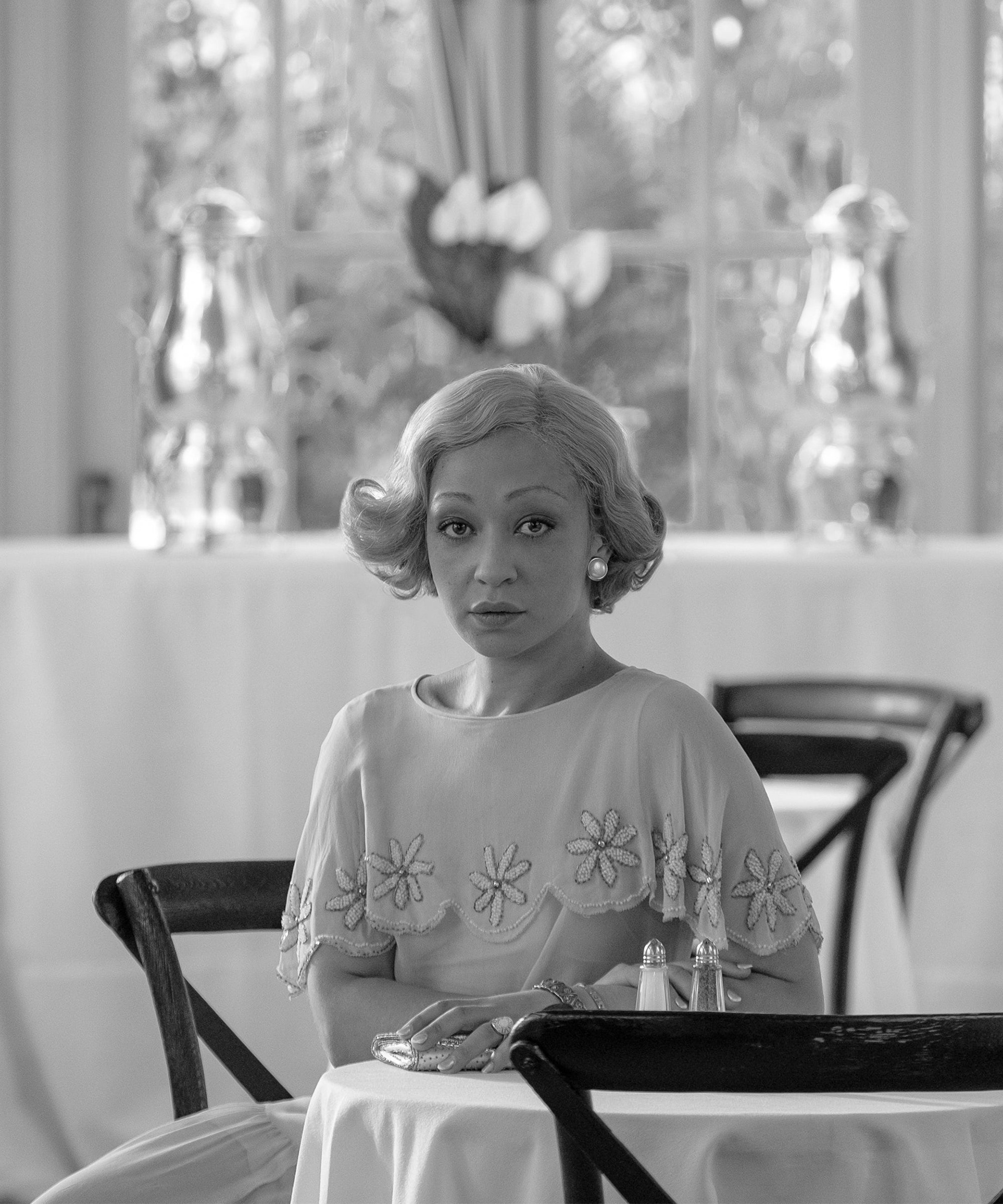
Clare Kendry in 'Passing' (Rebecca Hall, 2021). Portrayed by Ruth Negga.
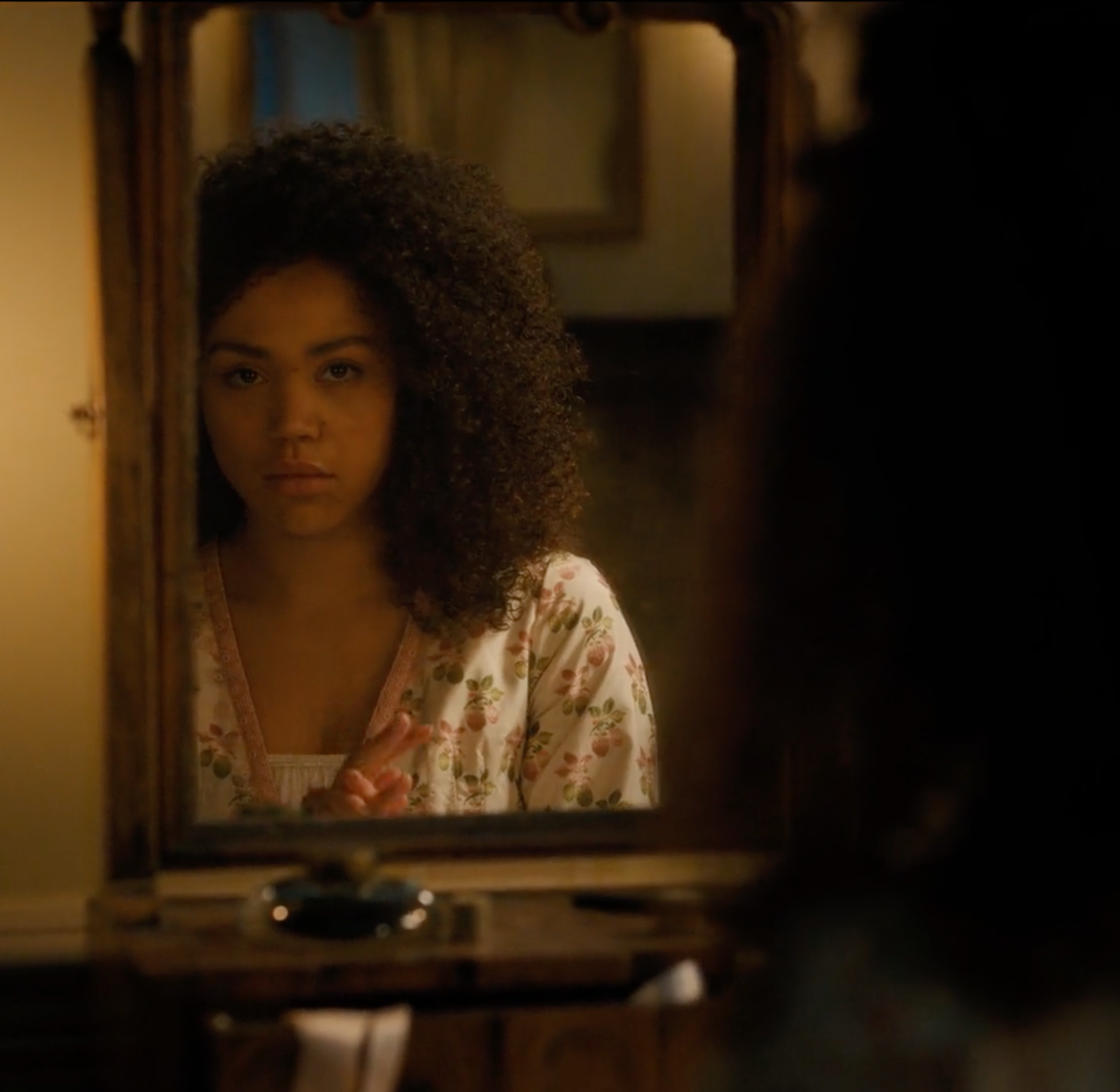
Marina Thompson in 'Bridgerton' (Netflix, 2020). Portrayed by Ruby Barker.
Nineteenth Century
In earlier texts, written during the abolitionist movement, the tragic mulatta was depicted sympathetically. She was beautiful, kind, loyal, and often well-educated. She was commonly portrayed as a white-passing woman who enjoyed the privileges of white society. However, her story always ended in tragedy. In many stories, it was the revelation of her Black ancestry that cemented her physical or psychological demise. She was often sold into slavery, abandoned, or died a violent death by the story's end. In line with abolitionist ideals, authors of the time emphasised that the system of Transatlantic slavery was responsible for her tragic downfall and used her to advocate for the end of enslavement.
Twentieth Century
From the late nineteenth century onwards, the tragic mulatta was increasingly depicted as manipulative, promiscuous, disloyal and exceedingly self-interested. Authors often presented her as someone who was ashamed of her Black ancestry and imbued her with a desire to pass as white at any cost. The tragic mulatta could often be seen betraying her friends and family for opportunities to experience the privileges that white people enjoyed in racially-segregated society. Portrayals around this time reflected social anxieties about racial mixing and gender roles. In fact, the character's failures were often used to further the narrative that miscegenation (racial mixing) was wrong.
Twenty-first Century
Although the trope was more popular in the nineteenth and twentieth centuries, tragic mulatta characters occasionally appear in contemporary literature, theatre, film and television. The character, Marina Thompson, in Netflix's Bridgerton has often been likened to tragic mulatta characters from previous eras.
Further Reading
1. The Quadroons, short story by Lydia Maria child (1842)
2. Clotel; or, The President's Daughter, novel by William Wells Brown (1953)
3. The Octoroon, play by Dion Boucicault (1859)
4. The Birth of a Nation, film adaptation of novel by Thomas Dixon Jr (1915)
5. Passing, novel by Nella Larsen (1929)
6. Imitation of Life, film adaptations of 1933 novel by Fannie Hurst (1934, 1959)
7. Bridgerton, TV adaptation of novel by Julia Quinn (2020)
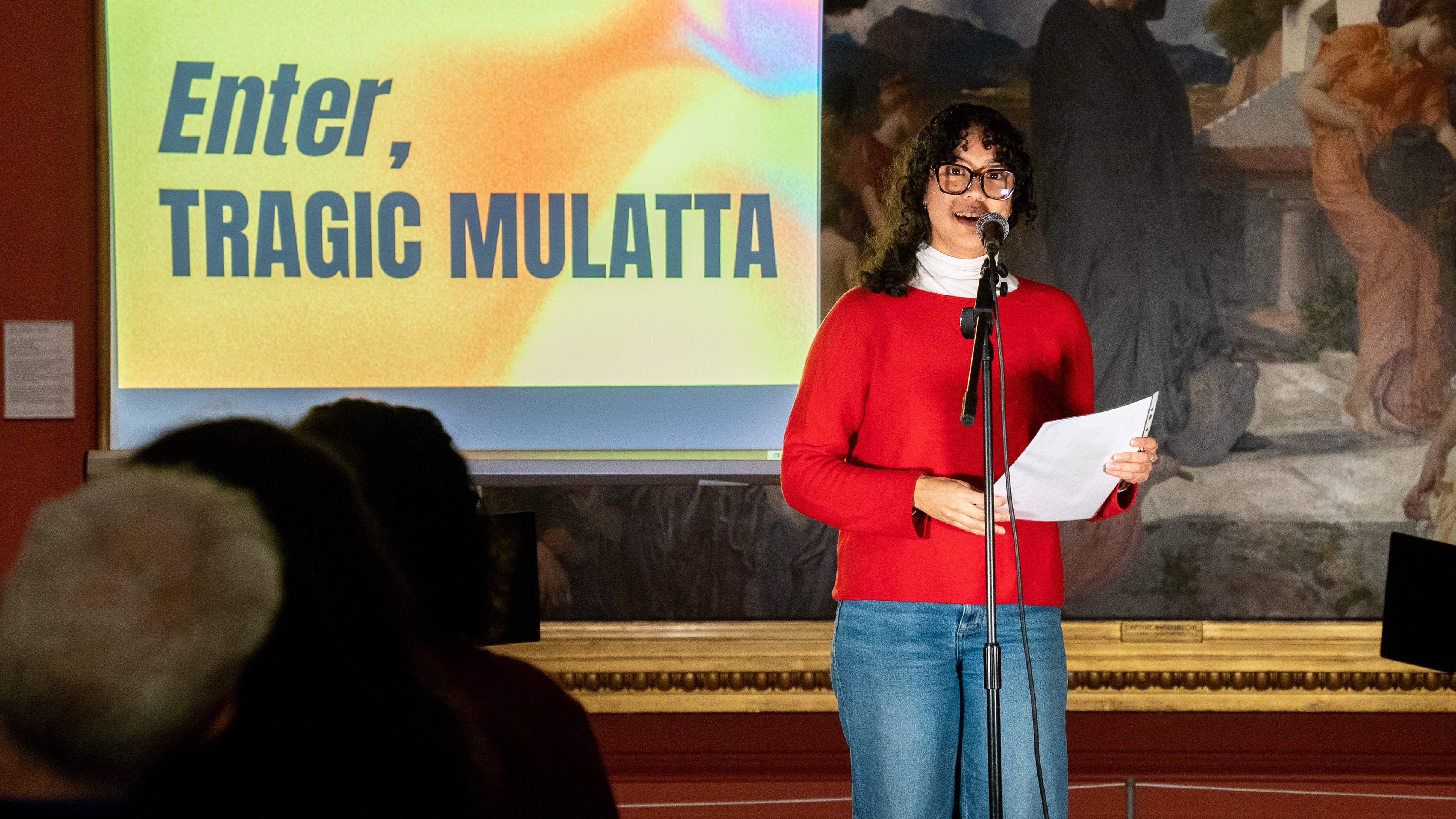
Amy opens the show at Manchester Art Gallery. Credit: Lydia Hooke (@latehoursdesign)
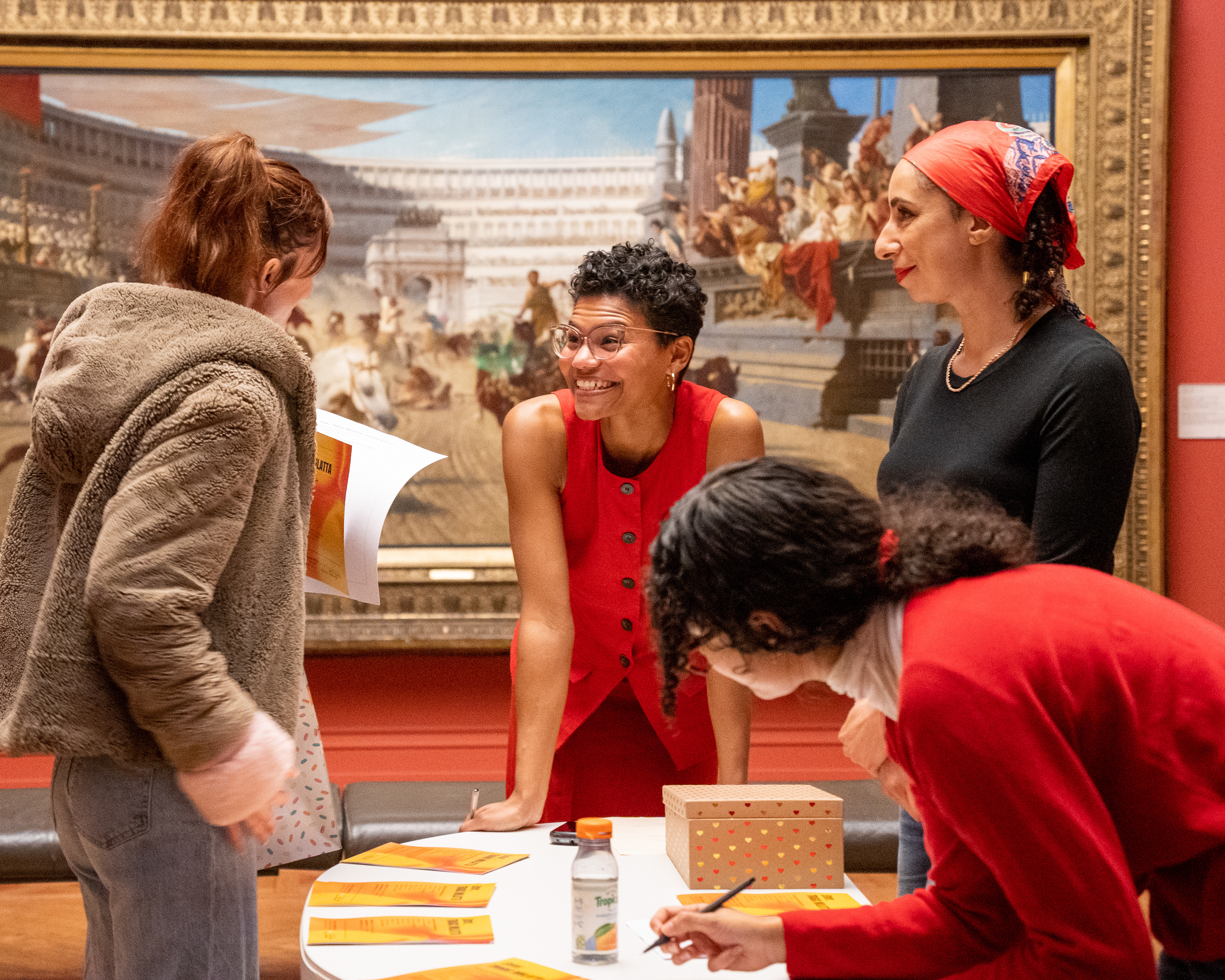
The 'Enter, Tragic Mulatta' team greet visitors at Manchester Art Gallery. Credit: Lydia Hooke (@latehoursdesign)
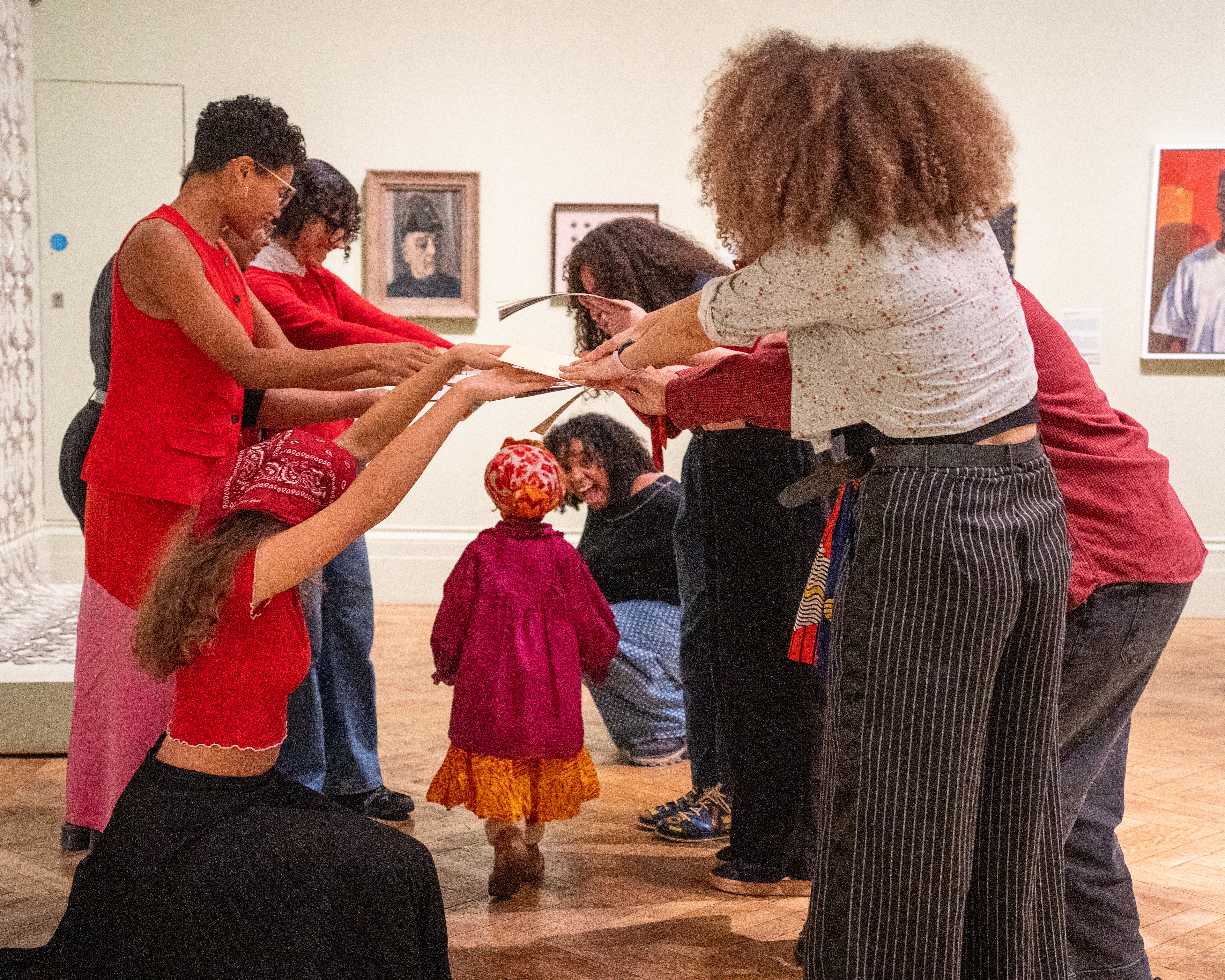
'Enter, Tragic Mulatta' performers warm-up before the performance at Manchester Art Gallery. Credit: Lydia Hooke (@latehoursdesign)
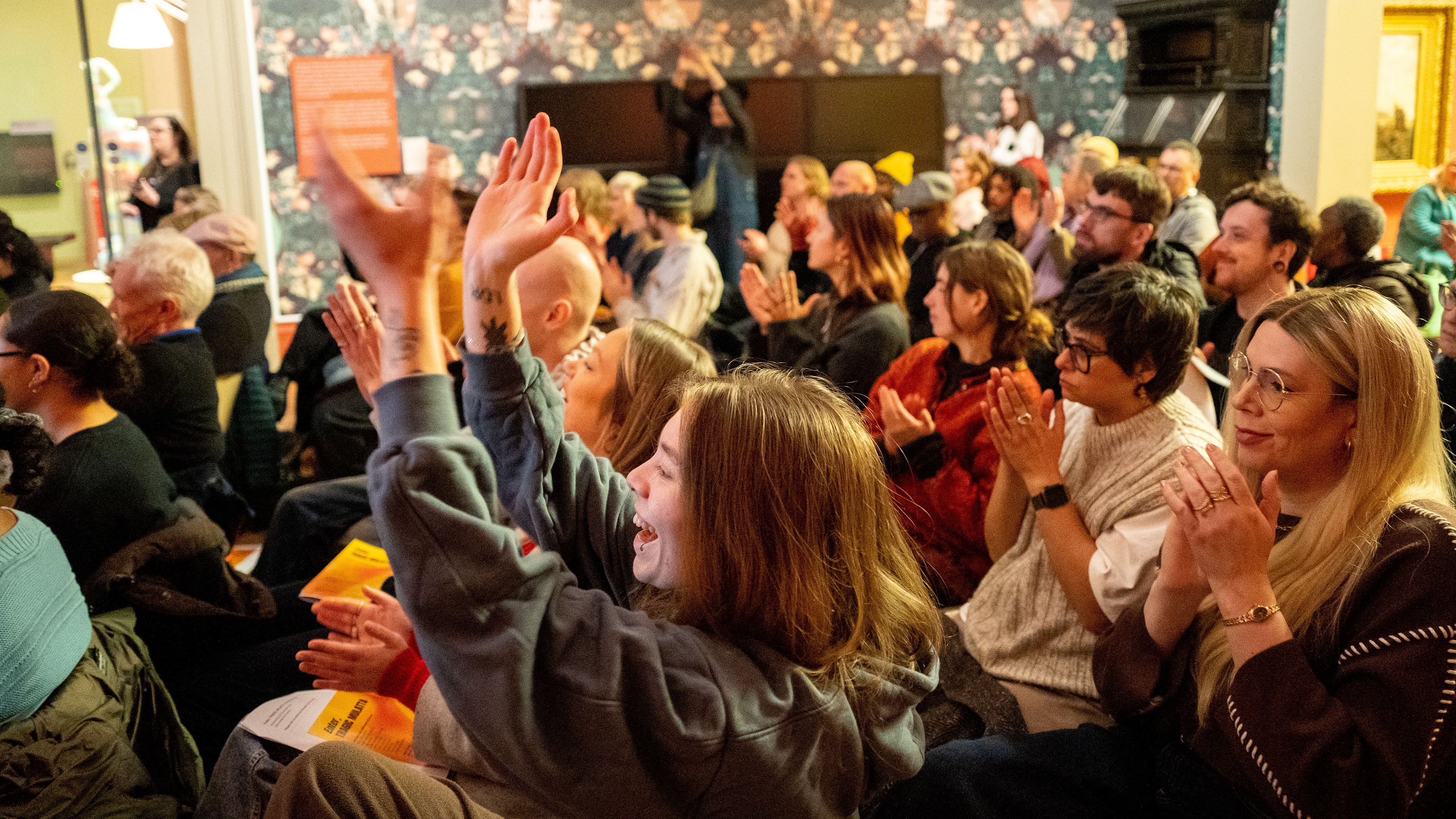
The 'Enter, Tragic Mulatta' audience at Manchester Art Gallery. Credit: Lydia Hooke (@latehoursdesign)
'Enter, Tragic Mulatta' Team
Directed by Amy Townsend-Lowcock
Dramaturgy and Workshop Facilitation by Ella Otomewo
Produced by Isabelle Cox
Writing and Performances by
Ella Otomewo
Ruby-Ann Patterson
Fae Wolfe
Kemi Charters-Bastide
Kirsty Devlin
Katie Sutton
Kayya Hudson
Indigo Jay
Lydia Williams
Lauren Fitzpatrick
Film by Kirstie Henderson
Photography by Lydia Hooke
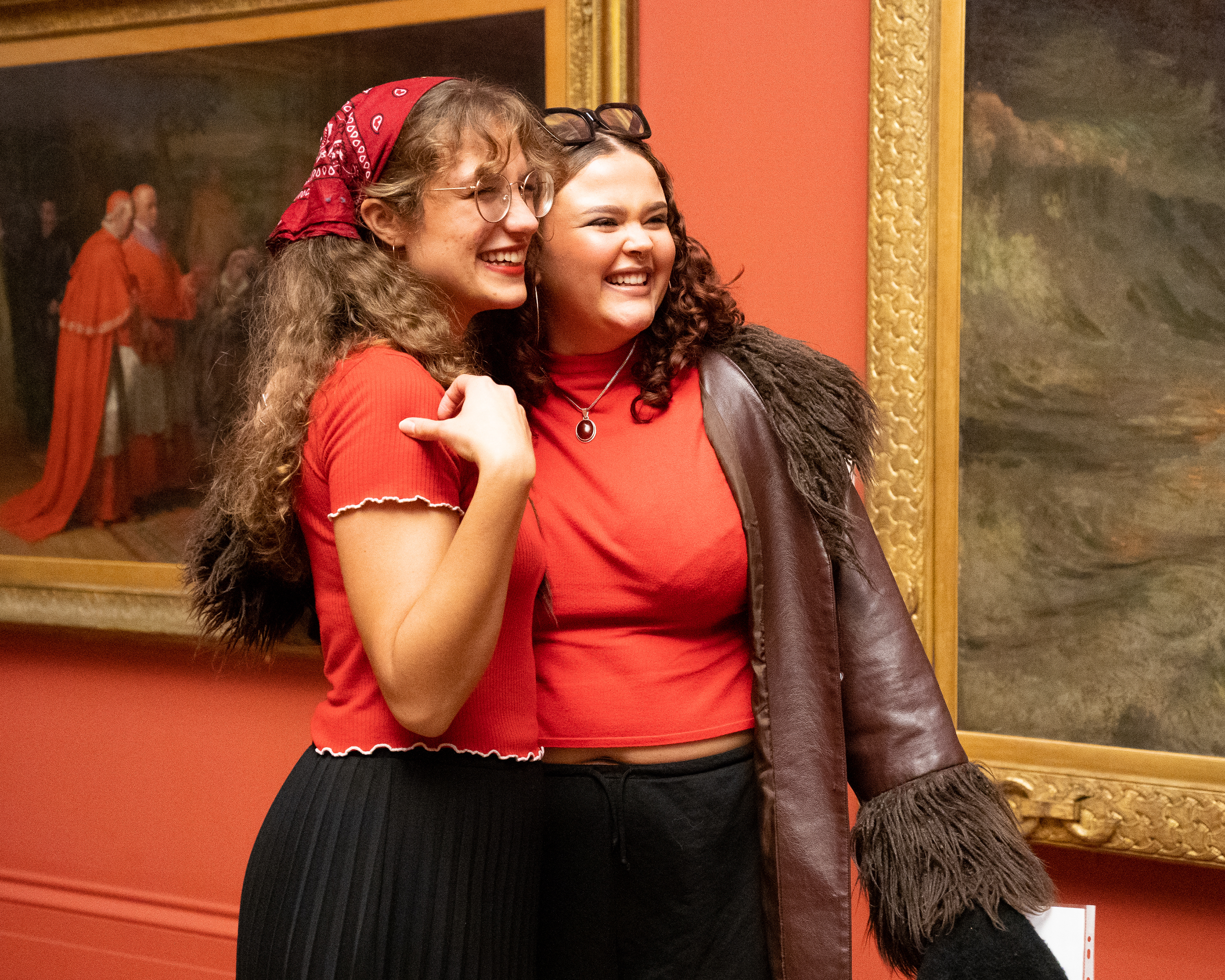
Katie and Kemi after the performance at Manchester Art Gallery. Credit: Lydia Hooke (@latehoursdesign)
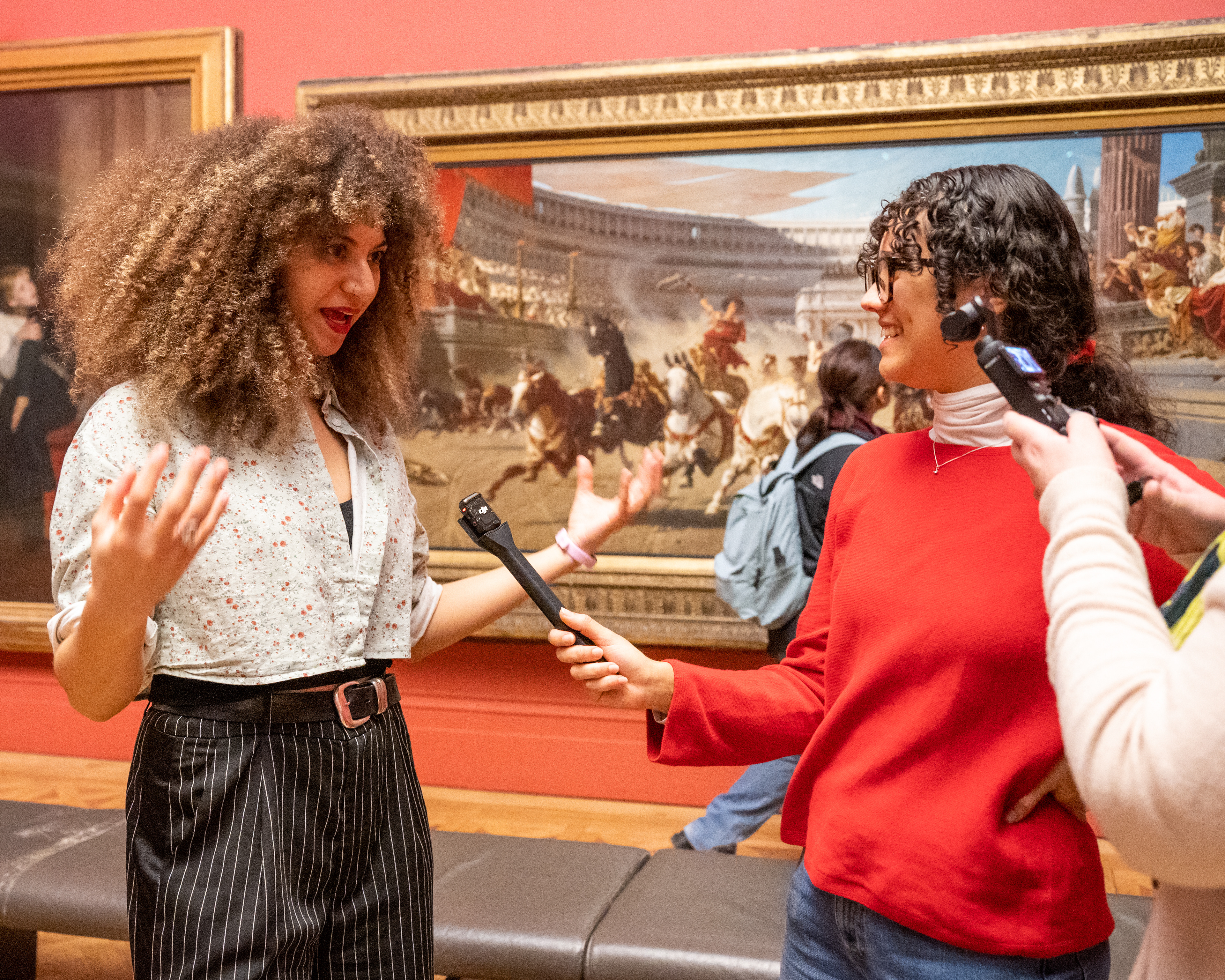
Lauren and Amy after the performance at Manchester Art Gallery. Credit: Lydia Hooke (@latehoursdesign)
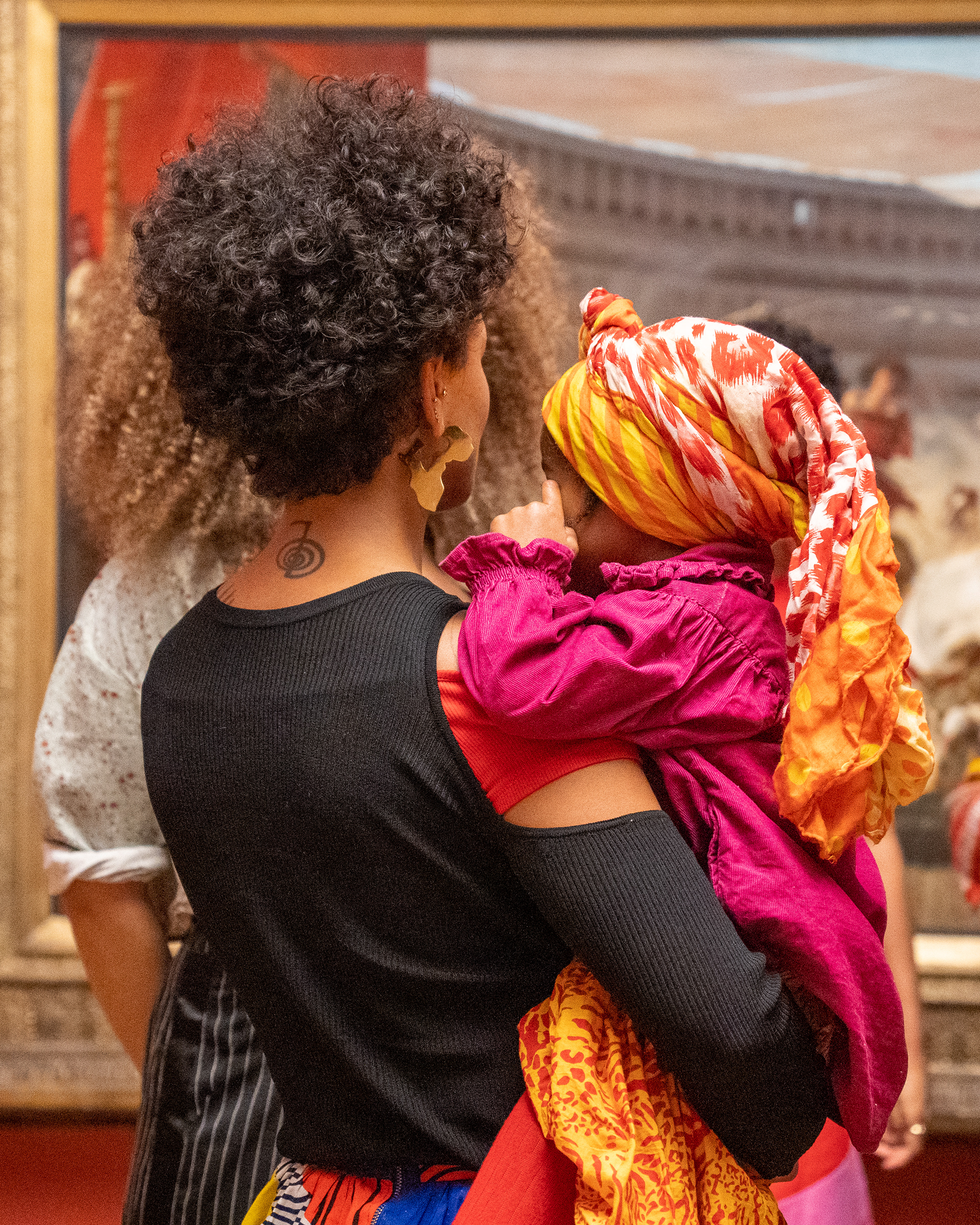
Kayya after the performance at Manchester Art Gallery. Credit: Lydia Hooke (@latehoursdesign)